Kofoedsminde Secure housing units
New residential units within Kofoedsminde secure institution
The masterplan for Kofoedsminde reimagines the facility as a coherent and humane environment where safety, dignity, and everyday life coexist. Through a careful refinement of structure, layout, and materiality, our project proposal creates clear, supportive, and homely surroundings for both residents and staff.
Security is seamlessly embedded within the architecture, present, yet never overpowering. The vision is to shape a place defined not by control, but by clarity, well-being, and respect, where the built environment actively supports stability, responsibility, and positive development.
Site structure and landscape integration
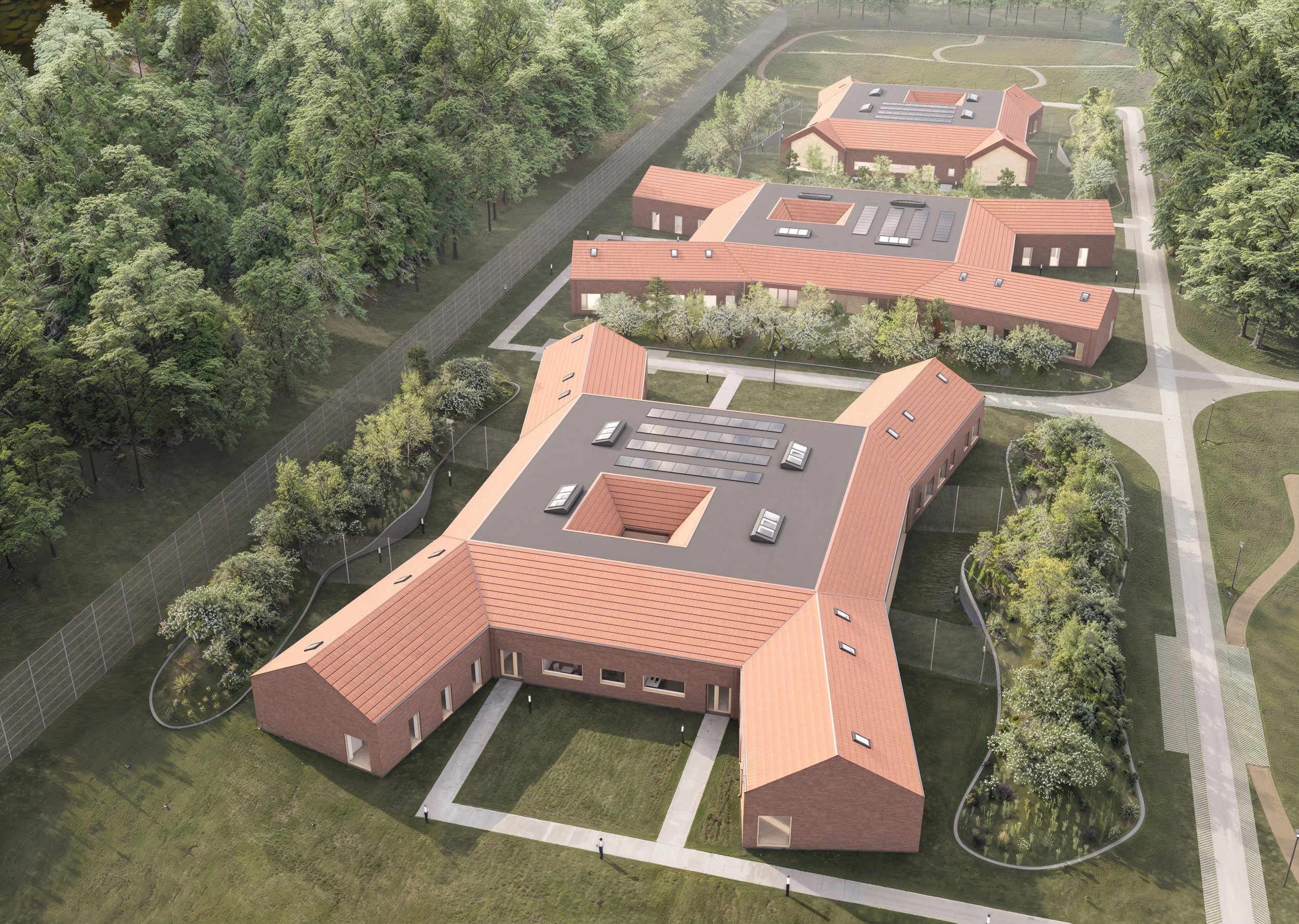
The masterplan balances operational efficiency with architectural generosity. Staff working conditions are strengthened through clear visual oversight, proximity between functions, and well-defined zones, while residents benefit from spaces that encourage autonomy, community, and everyday routines.
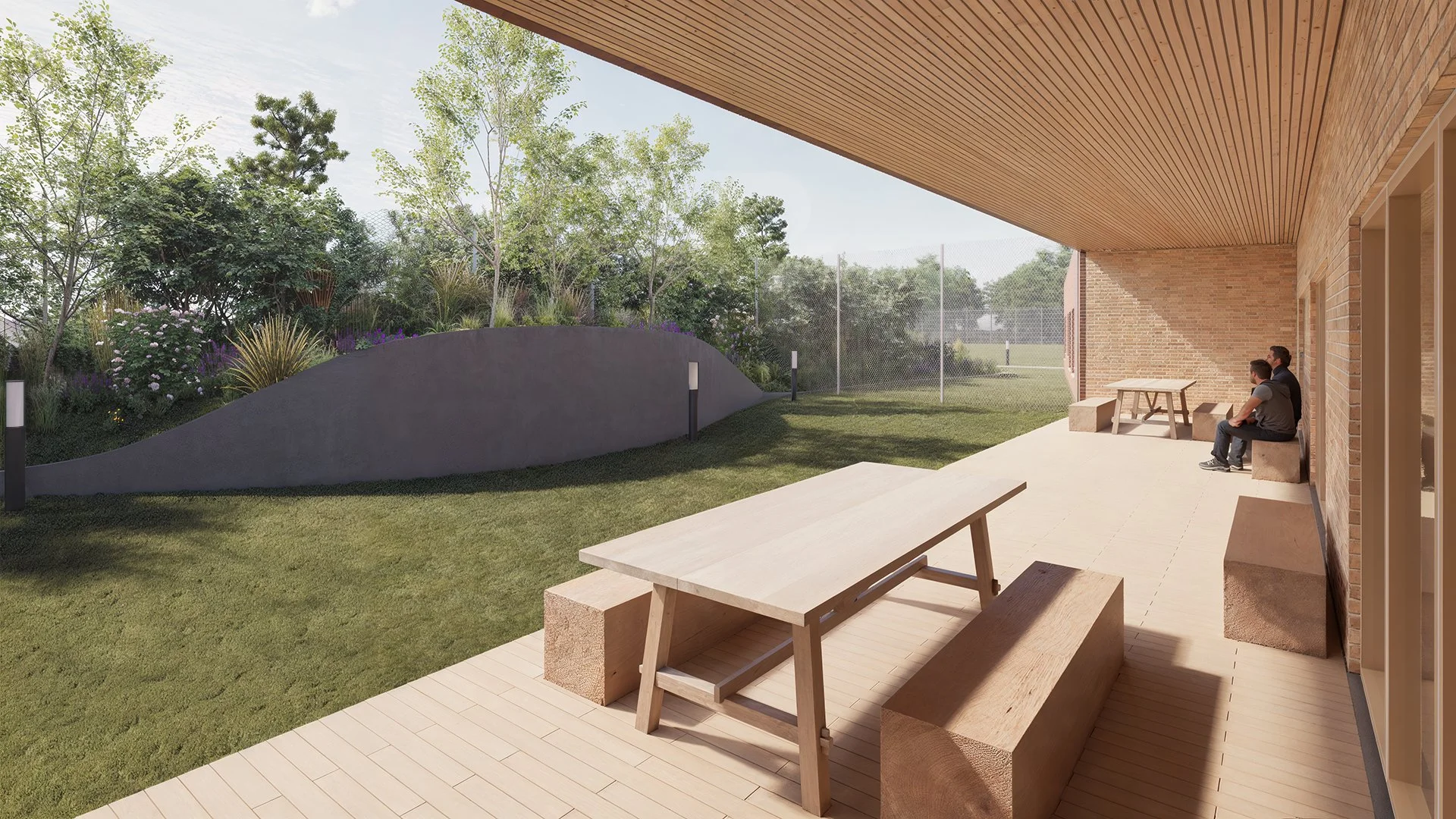
The placement of the H-shaped buildings is adjusted through rotation and subtle repositioning. This reduces direct overlooking between residential units and improves privacy. At the same time, it strengthens the relationship between buildings, paths, gardens, and the surrounding landscape.
Facts
-
Architect
-
Region Sjælland
-
Rødby, Denmark
-
3,380 m²
-
Competition proposal 2025
Outdoor spaces for everyday life
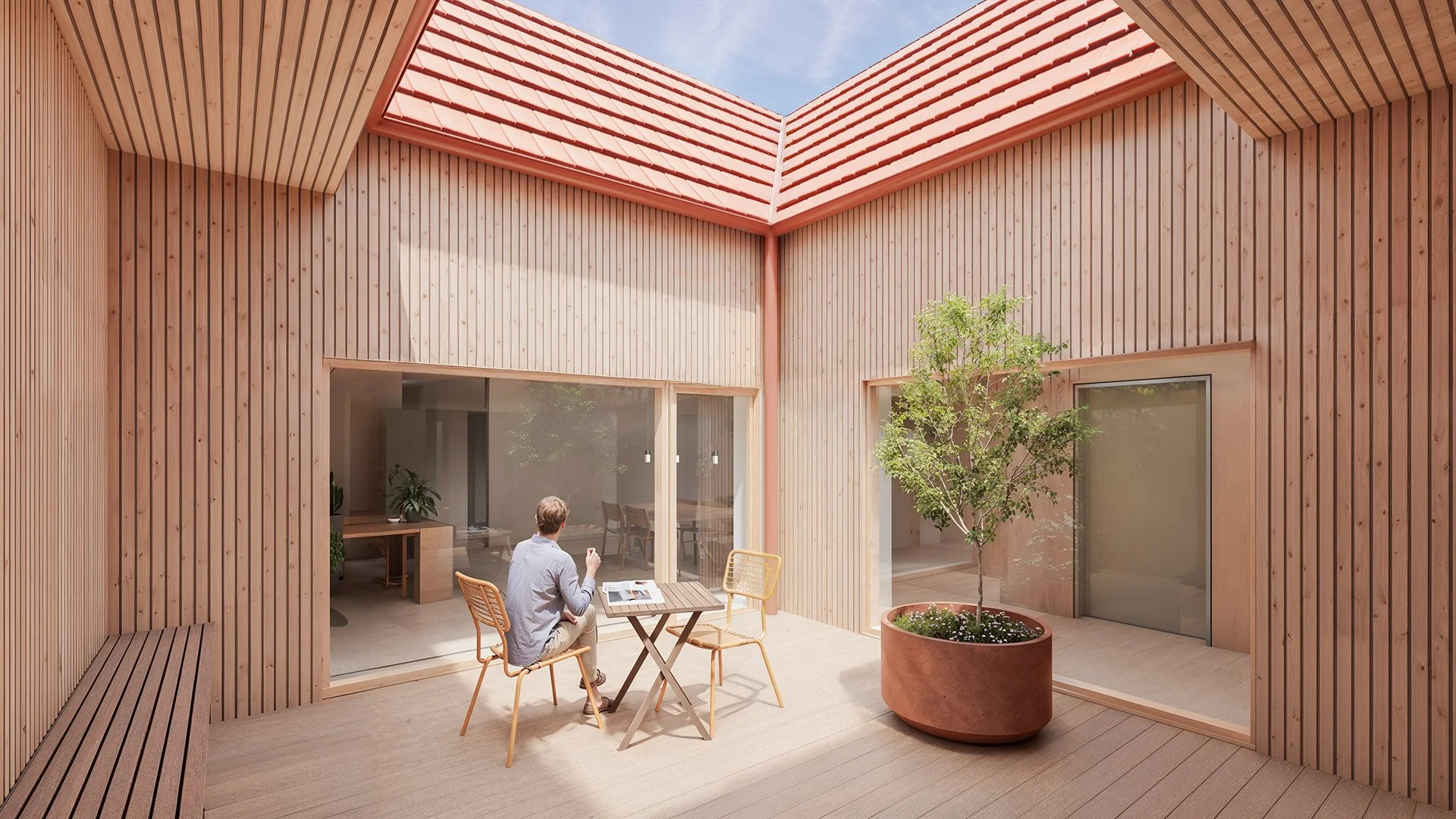
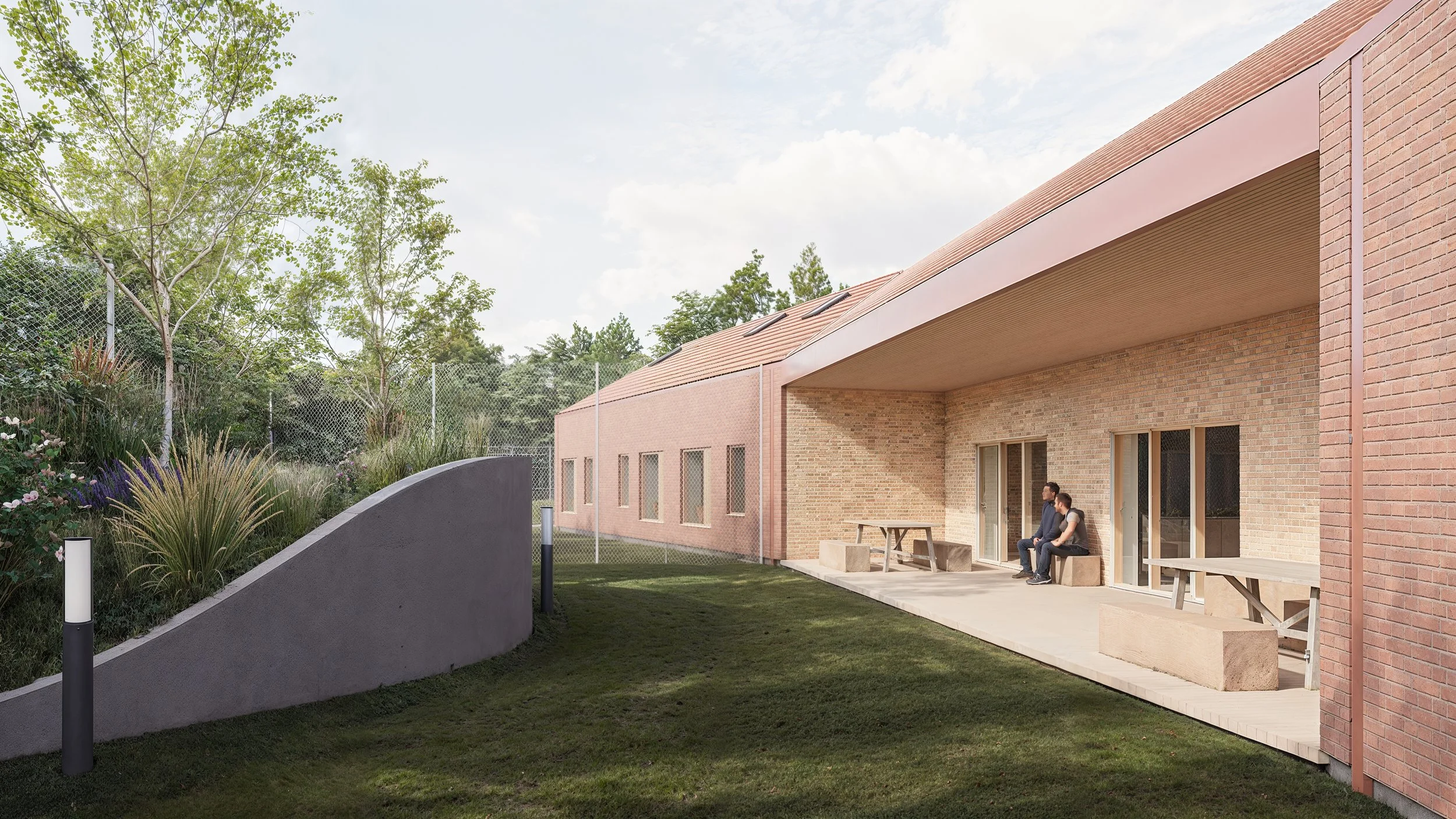
Outdoor areas are designed to support everyday life. They function as places for rest and movement, while also acting as visual buffers between buildings. Together, these elements contribute to a calmer and more coherent institutional environment.
Dynamic overview
Security and operational requirements are fully integrated into the architectural concept from the outset. However, security is embedded discreetly within the spatial and material logic of the buildings, ensuring that it supports rather than defines the lived experience of the place. Robust detailing, controlled sightlines, and layered access strategies provide the necessary level of safety while maintaining a humane and dignified atmosphere.
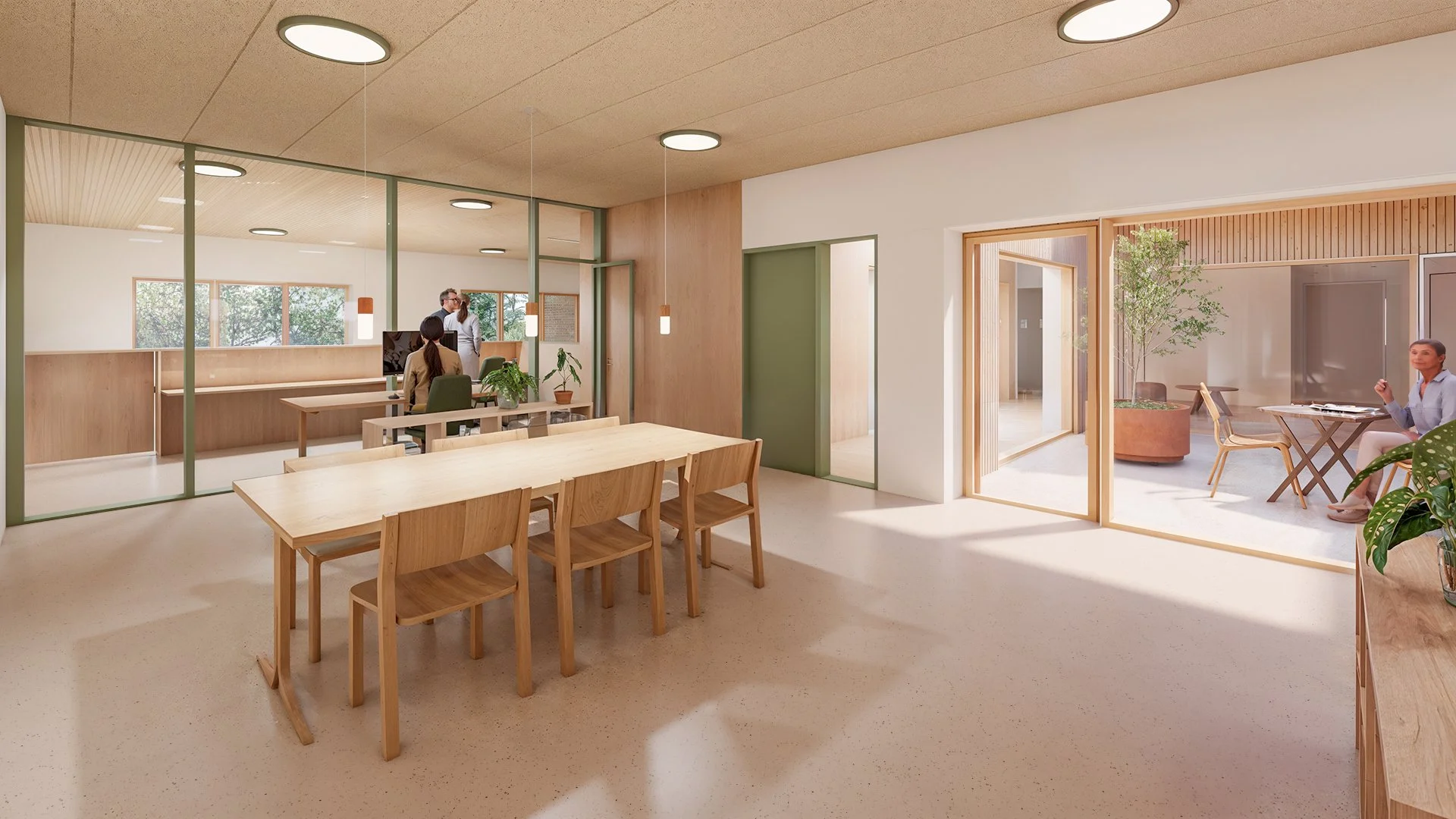
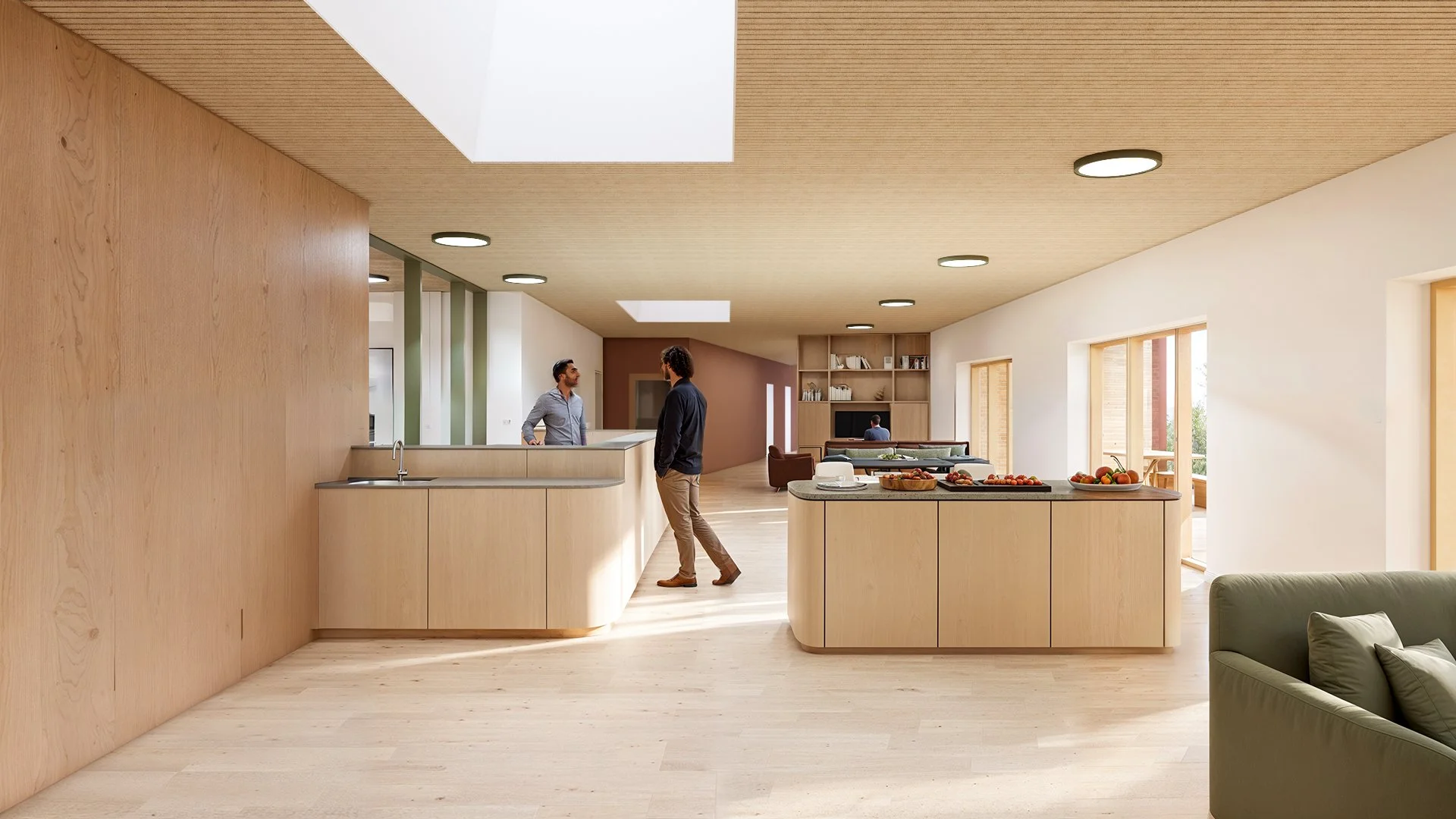
The layouts are developed with a focus on presence rather than control. A clear distinction between front office and back office functions allows staff to maintain visual and acoustic contact with shared spaces, corridors, and rooms. This contact is felt as attentive presence, not constant surveillance.
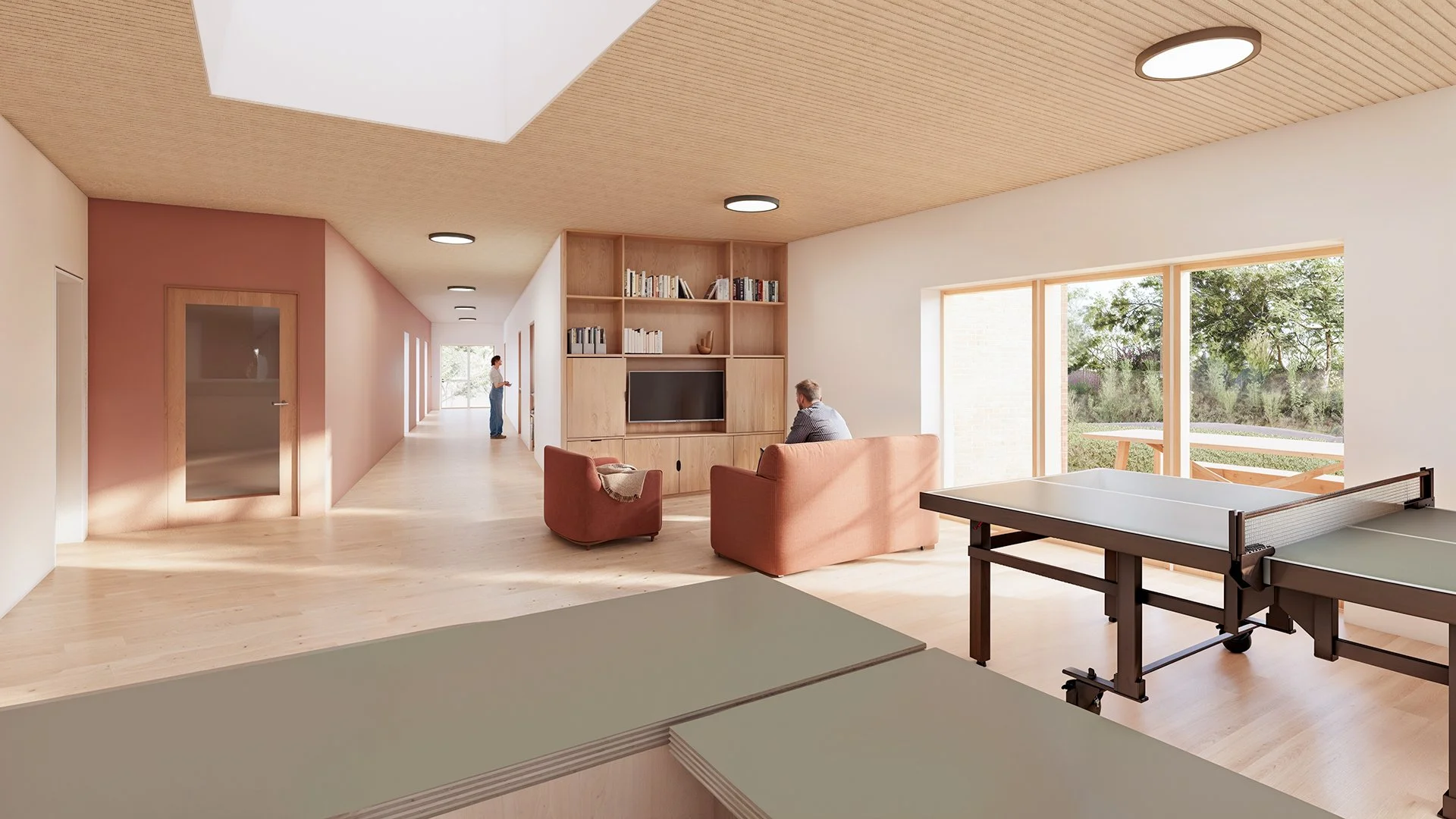
At the core of the design is the ambition to create environments that are simultaneously safe, legible, and homely—for both residents and staff. The spatial layout is organized to ensure intuitive orientation, short and logical circulation routes, and clear transitions between public, shared, and private domains. This structured clarity supports daily routines, reduces stress, and enhances the overall sense of stability and predictability within the facility.
Robustness and homeliness
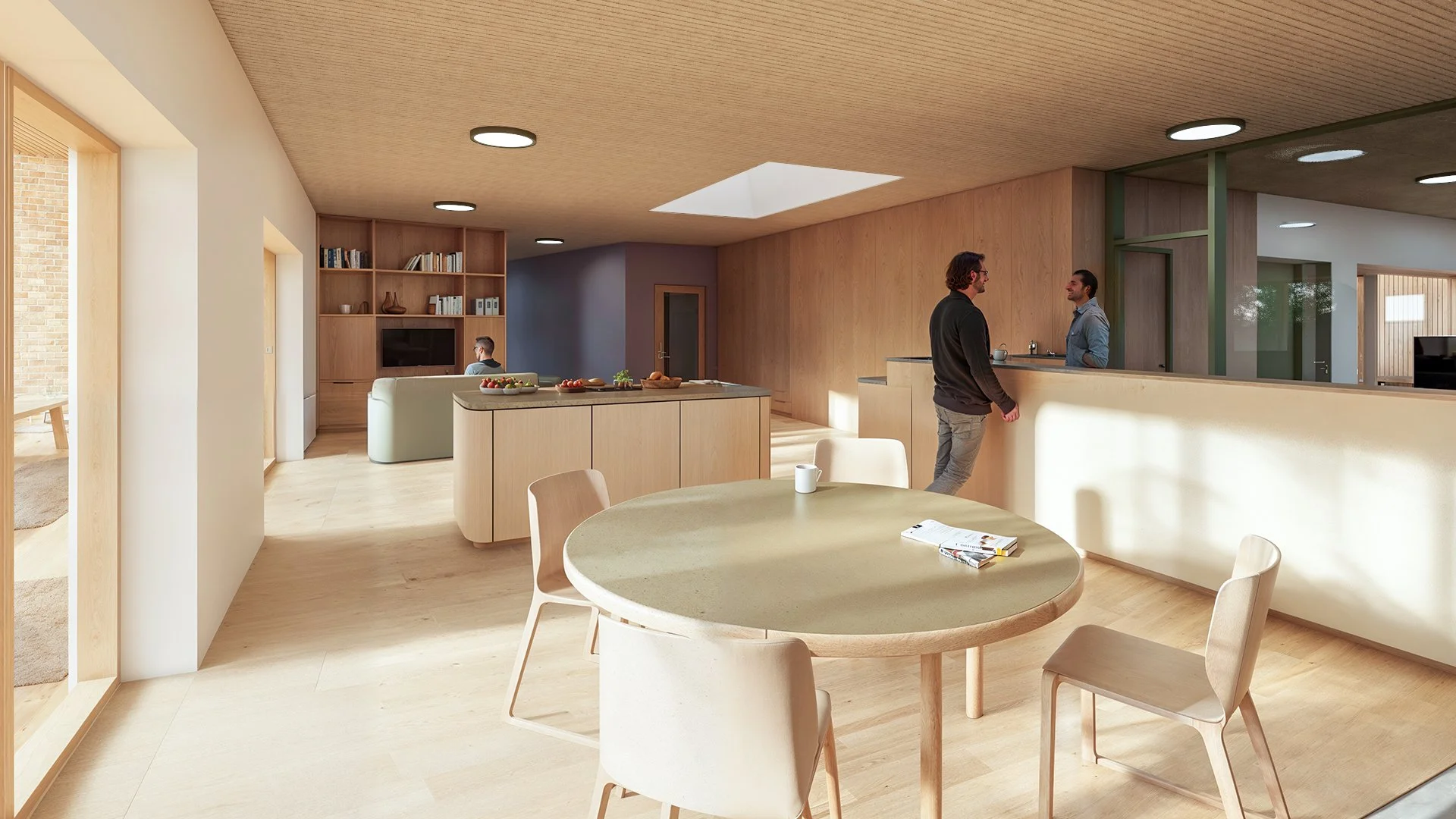
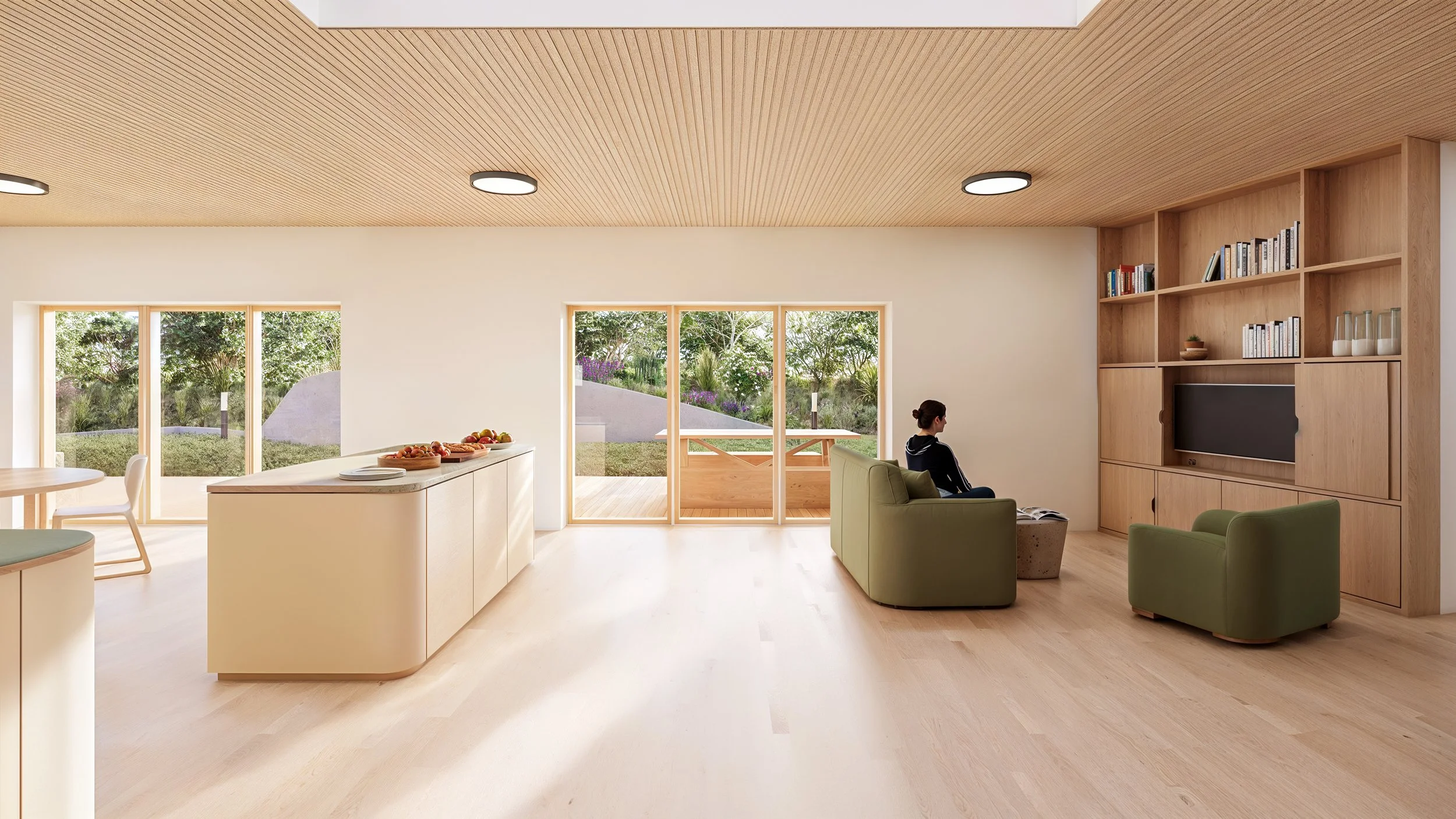
Materiality plays a central role in shaping identity and well-being. A warm and tactile palette, rooted in durability and low maintenance, contributes to an environment that feels calm, domestic, and resilient.
Natural materials, daylight, and carefully composed outdoor spaces foster connection to the surrounding landscape and reinforce a sense of normality within a secure framework. The material strategy balances durability with warmth. Brick façades give the buildings a sense of permanence and familiarity. Inside, materials with wood-like finishes, subdued colours, and tactile surfaces soften the institutional character.
Residents’ rooms
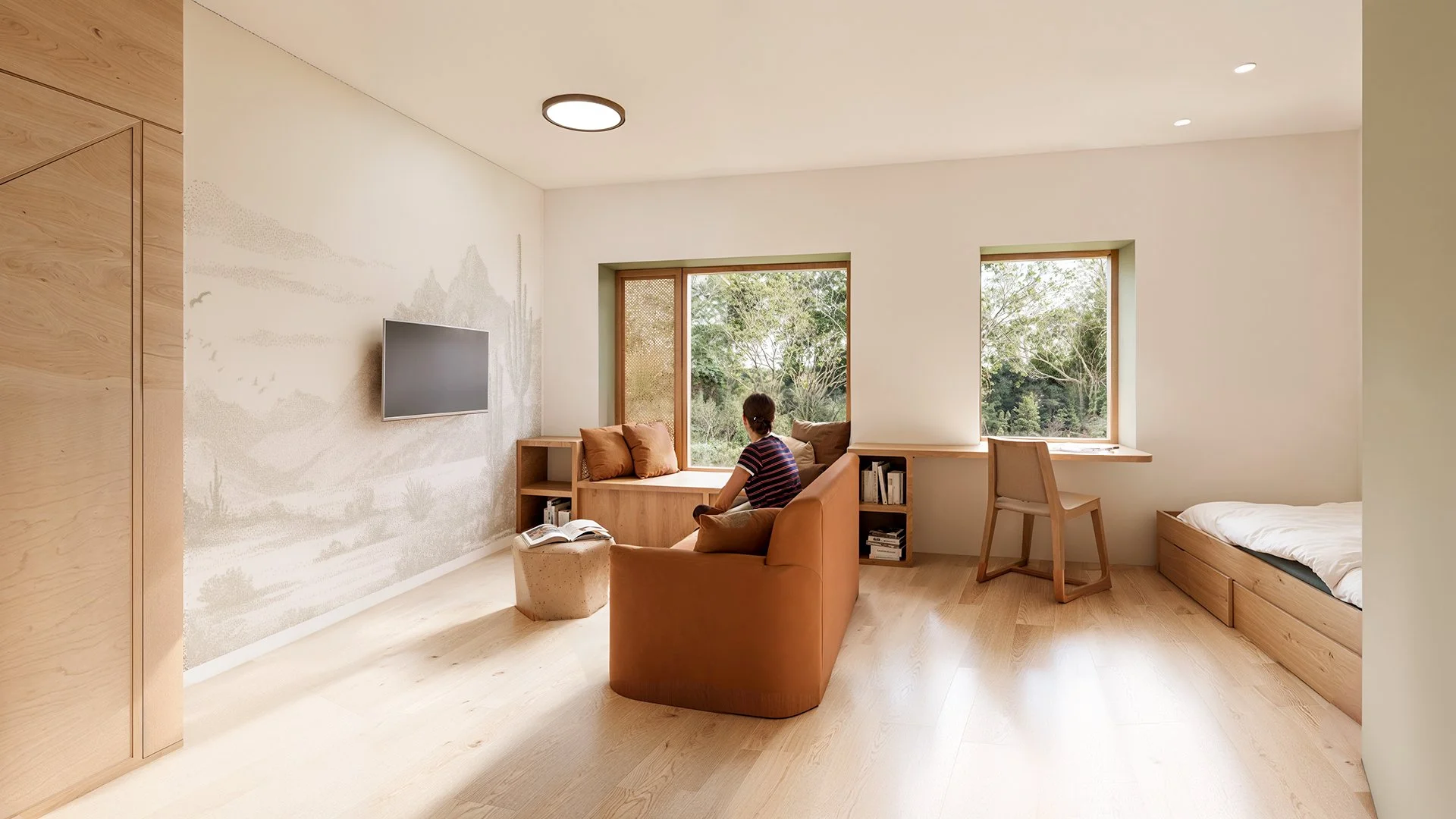
Residents’ rooms are designed to be clear, calm, and functional. Beds are placed away from entrances to support privacy. Daylight is concentrated in the living zone.
Bathrooms are positioned along the corridor to support operations, security, and emergency access. Fixed furniture is integrated with care, ensuring safety without making the rooms feel closed or restrictive.
Equal focus on staff
Staff working conditions are an integral part of the project. Common rooms, rest areas, and a shared courtyard create spaces for pause and recovery. Daylight and a sense of separation from daily demands are key qualities.
The front office solution allows staff to remain visible and accessible without dominating the spaces. Presence is balanced, supportive, and calm.