
New Visitor’s Center Preikestolen
A Quiet Beacon
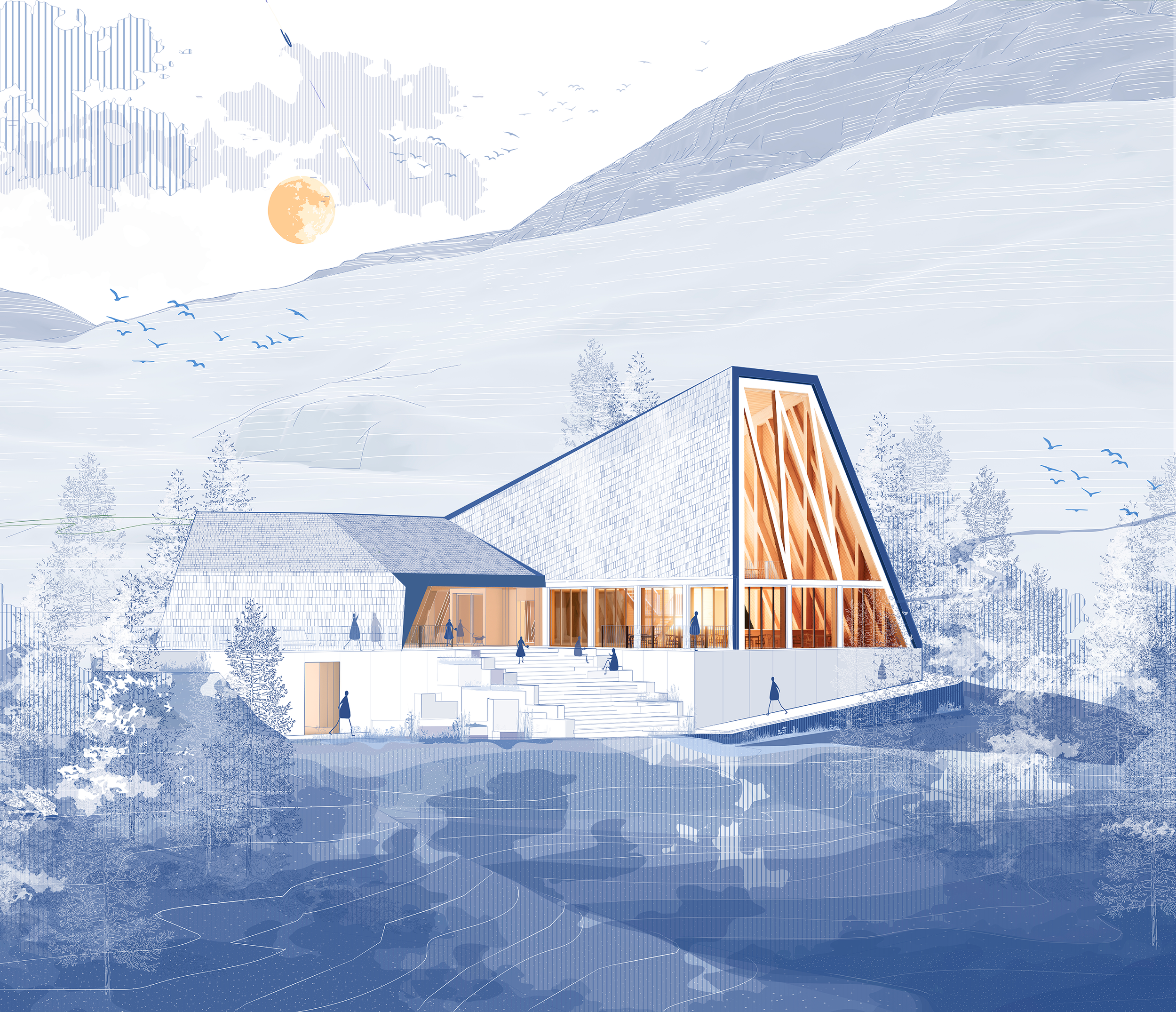
“I walk through the forest, among the mountains, lakes, and the fjord. Between the tall, green treetops, I catch sight of the building. The reflective granite stones on the facade capture the sunlight and guide me forward. It is winter, and I have returned. The landscape is covered in thick, white snow. It is still dark, and only the moon and stars light up the sky. I can no longer see the bright facade. It disappears into the white landscape. But as I step onto the path, a crack opens in the facade, and light seeps out. A light in the night that shows me the way. It guides me. The closer I get to the building, the more I notice the details in the materials. The indoor woodwork has been crafted with care and love, while the granite stones on the facade bear clear marks of skilled craftsmanship. Every cut and every joint testifies to a deep respect for nature and the resources that surround us.”
Stiftelsen Preikestolen has invited architects to design a new visitor center at Preikestolen, one of Norway’s most visited natural landmarks. The project responds to increasing visitor numbers and the need for improved arrival, orientation, and visitor flow, establishing the visitor center as a clear point of arrival within the landscape.

“Summer”
The white house in the green landscape

“Winter”
The warm light in the snowy landscape
Facts
-
Architect
-
Stiftelsen Preikestolen
-
Jorpeland, Norway
-
Approx. 1,000 m²
-
Not executed, competition 2024
Rooted in the Landscape
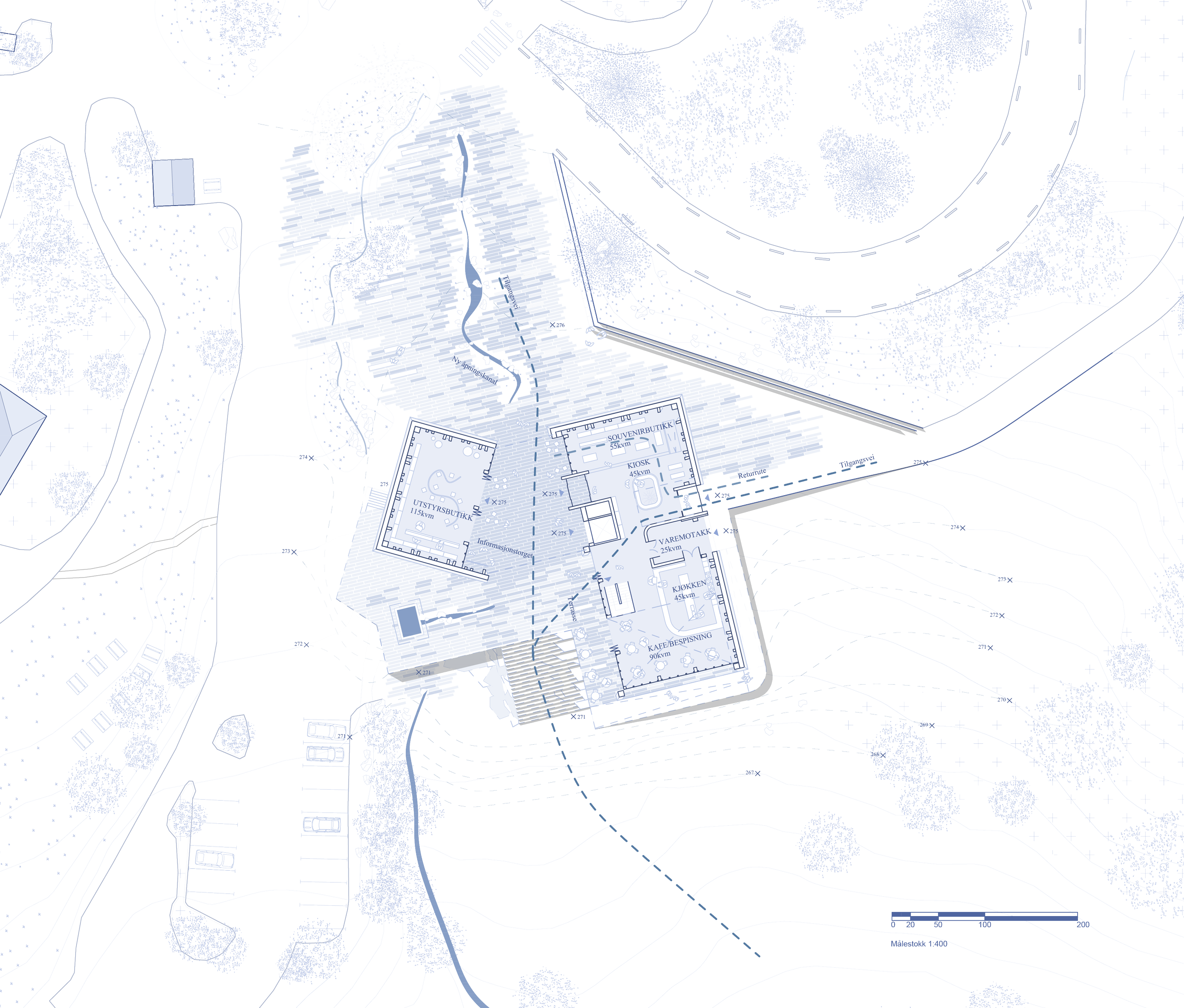
Using local materials such as timber and granite, the building emerges from the Norwegian landscape, shaped in harmony with the existing terrain. A stream serves as a guiding element, leading visitors from the parking area through the building and onward to a new hiking route. This route follows the stream down to Revsvatnet Lake and connects to the existing trail to Preikestolen. The return follows the existing path, forming a circular route that reduces congestion while offering a varied sequence of experiences along the way.
Four seasons
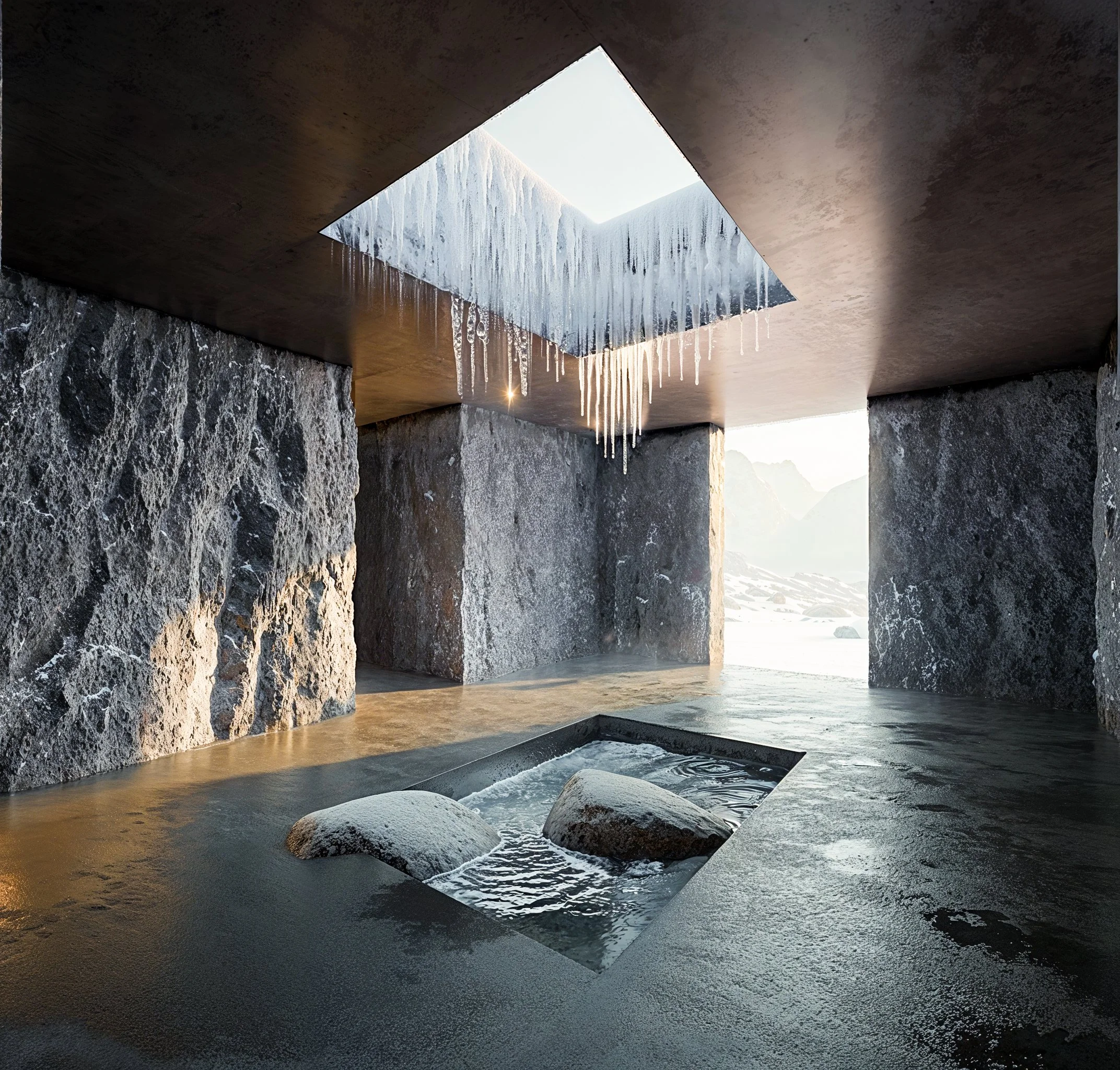
Before setting out on the route to Preikestolen, visitors have the opportunity to pass through a distribution space with access to showers, restrooms, and storage lockers. This space functions as an in-between space, where seasonal changes directly influence atmosphere and experience. The concept blurs the boundaries between inside and outside, creating a sense of anticipation and excitement for the hike to Preikestolen that varies with the time of year.
Natural rhythm
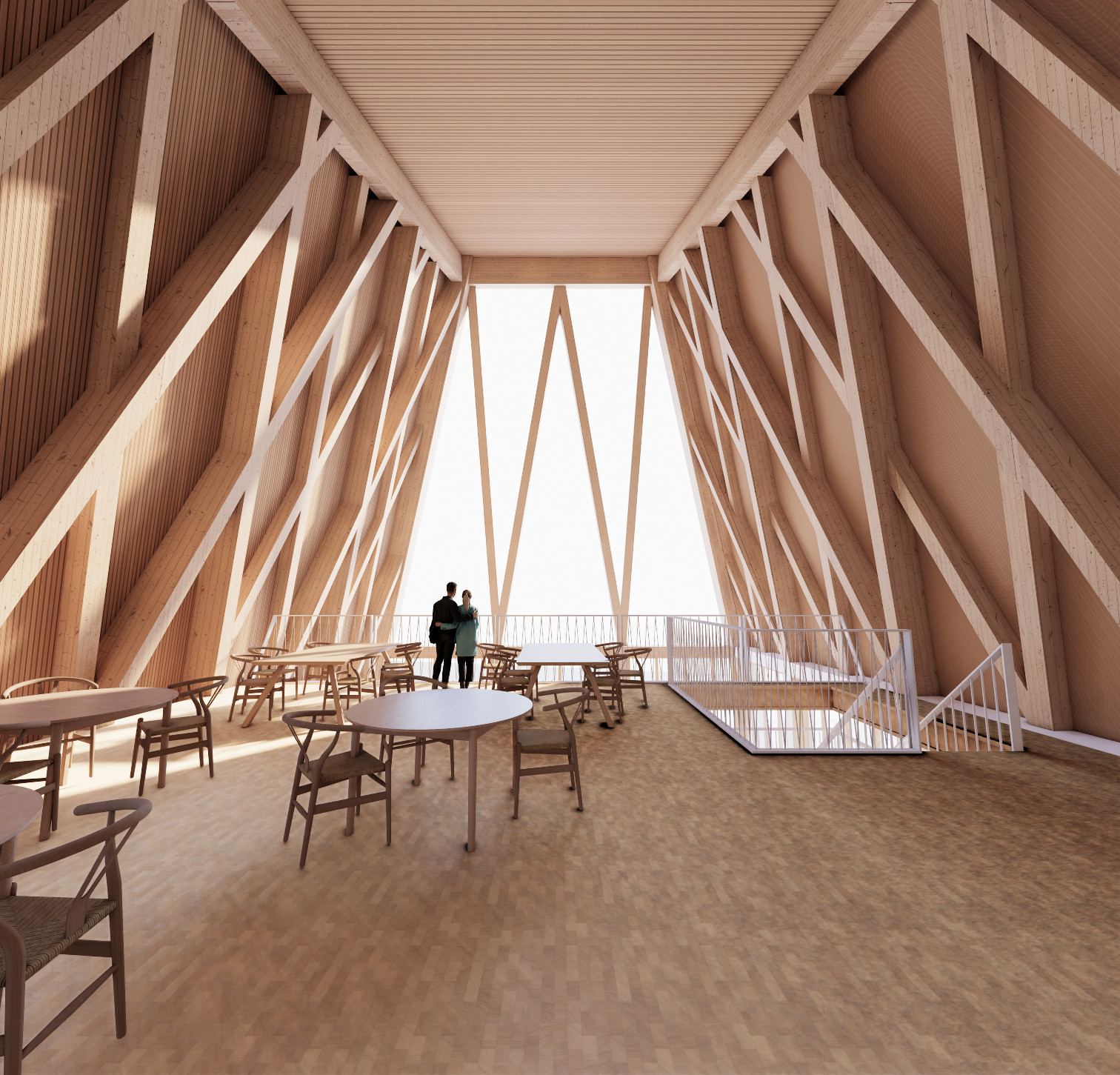
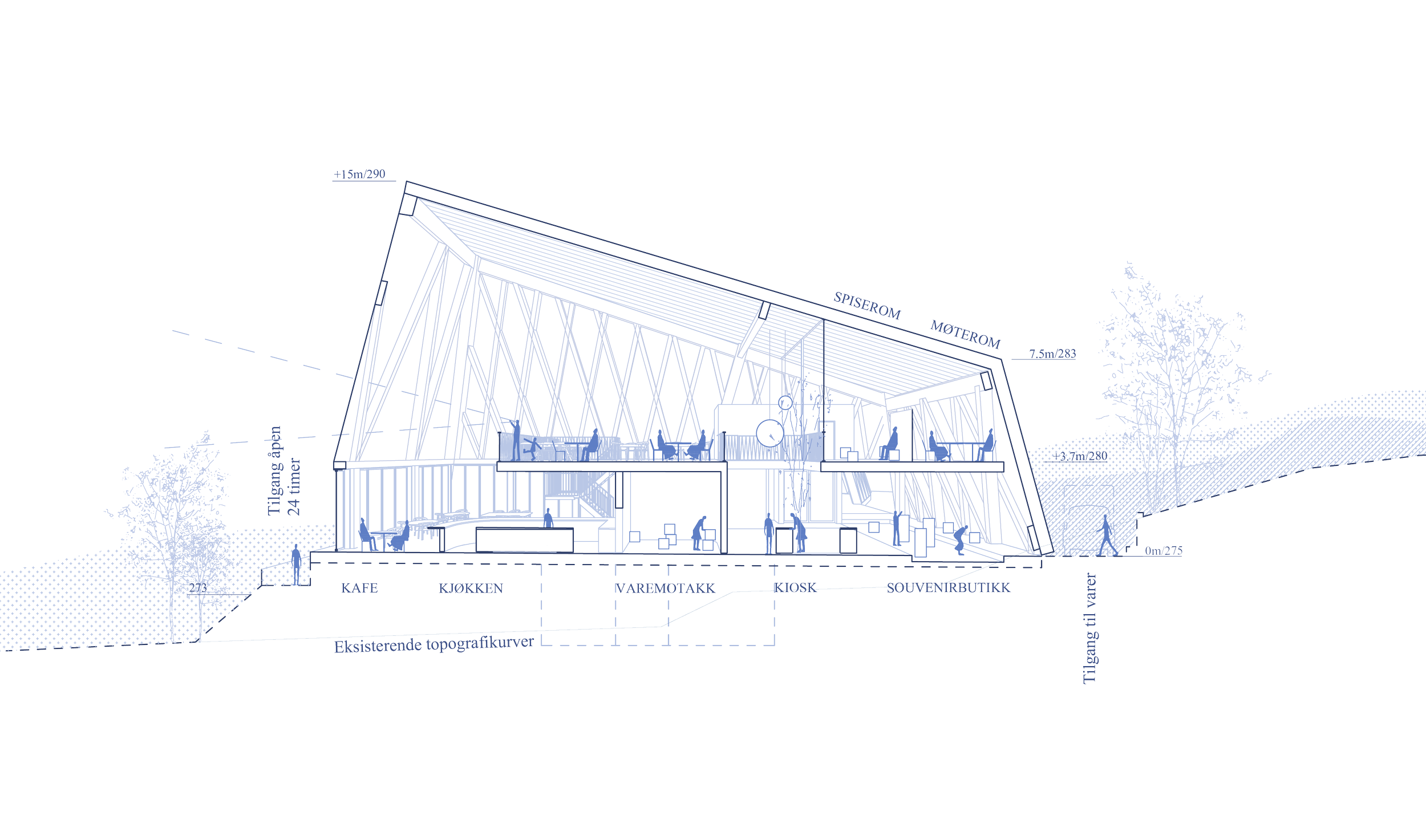
Lýsir is designed with a generous ceiling height that enables natural ventilation, drawing cool air in at lower levels and releasing warm air through upper openings. The building’s materials help store and regulate heat, supported by electric heating powered by hydropower during winter, allowing the building to operate in accordance with the natural rhythm of the surrounding climate.

Sightlines
Each opening is aligned with key sightlines in the landscape and gently guides visitors through light, visibility, and orientation. Rather than acting as explicit markers, the openings work together to support intuitive movement and help visitors understand where to go without drawing attention to themselves.
Materials
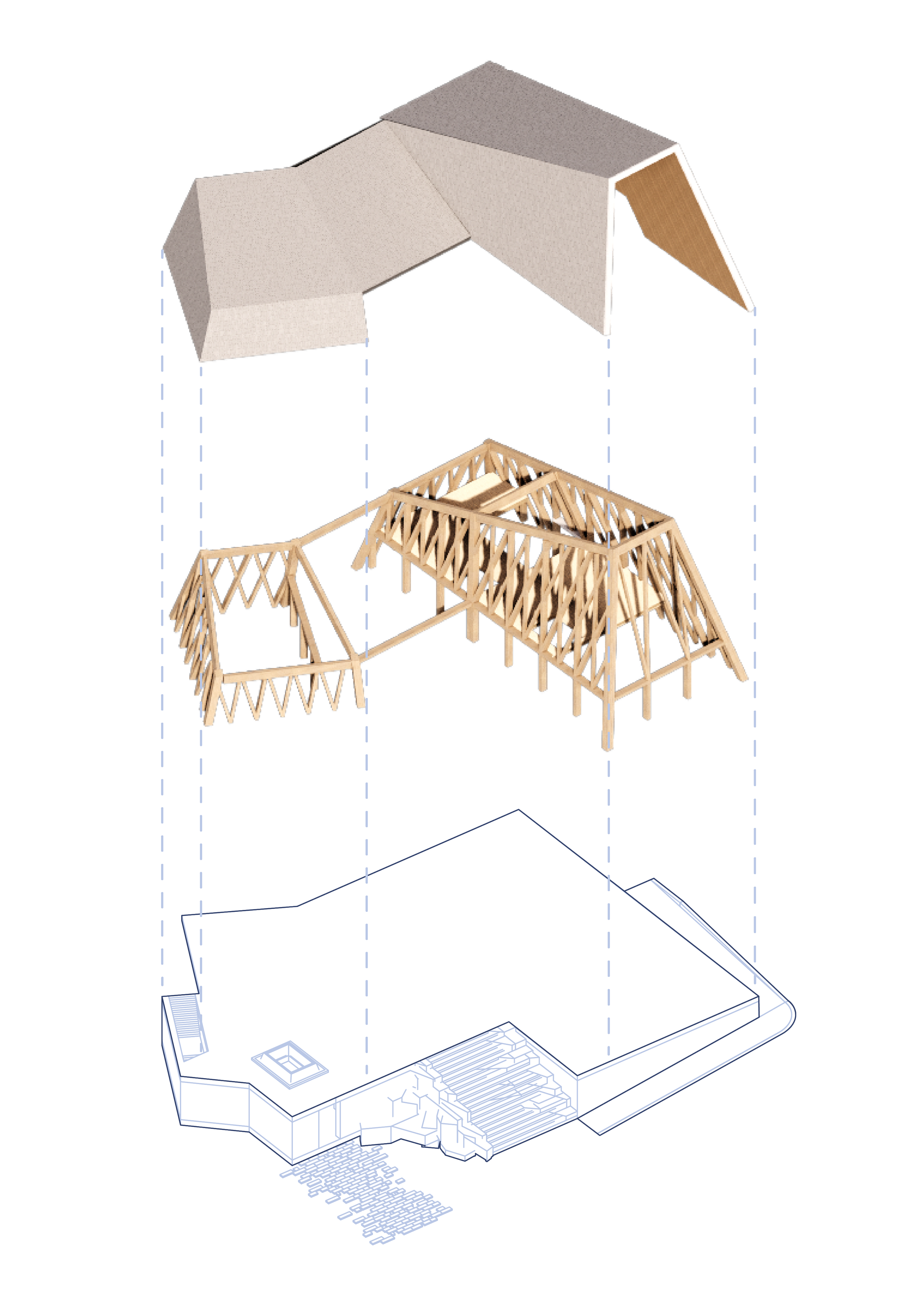
Locally sourced granite and reclaimed wood meet in harmony—forming a robust and tactile material palette. Durable, chemical-free, and regenerative, the materials are chosen to honor the surrounding nature while minimizing the project’s carbon footprint.