Sønder Omme Prison
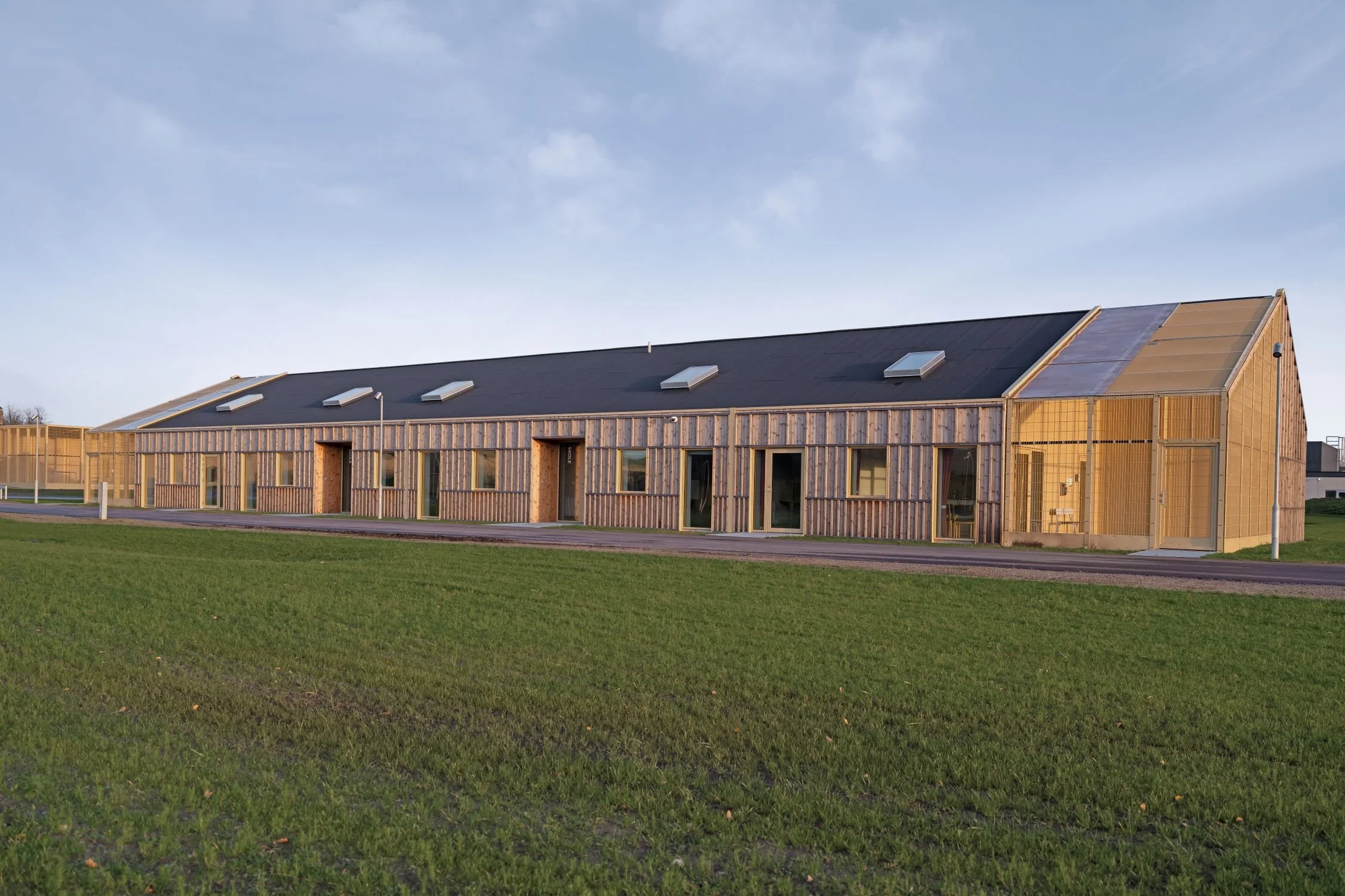
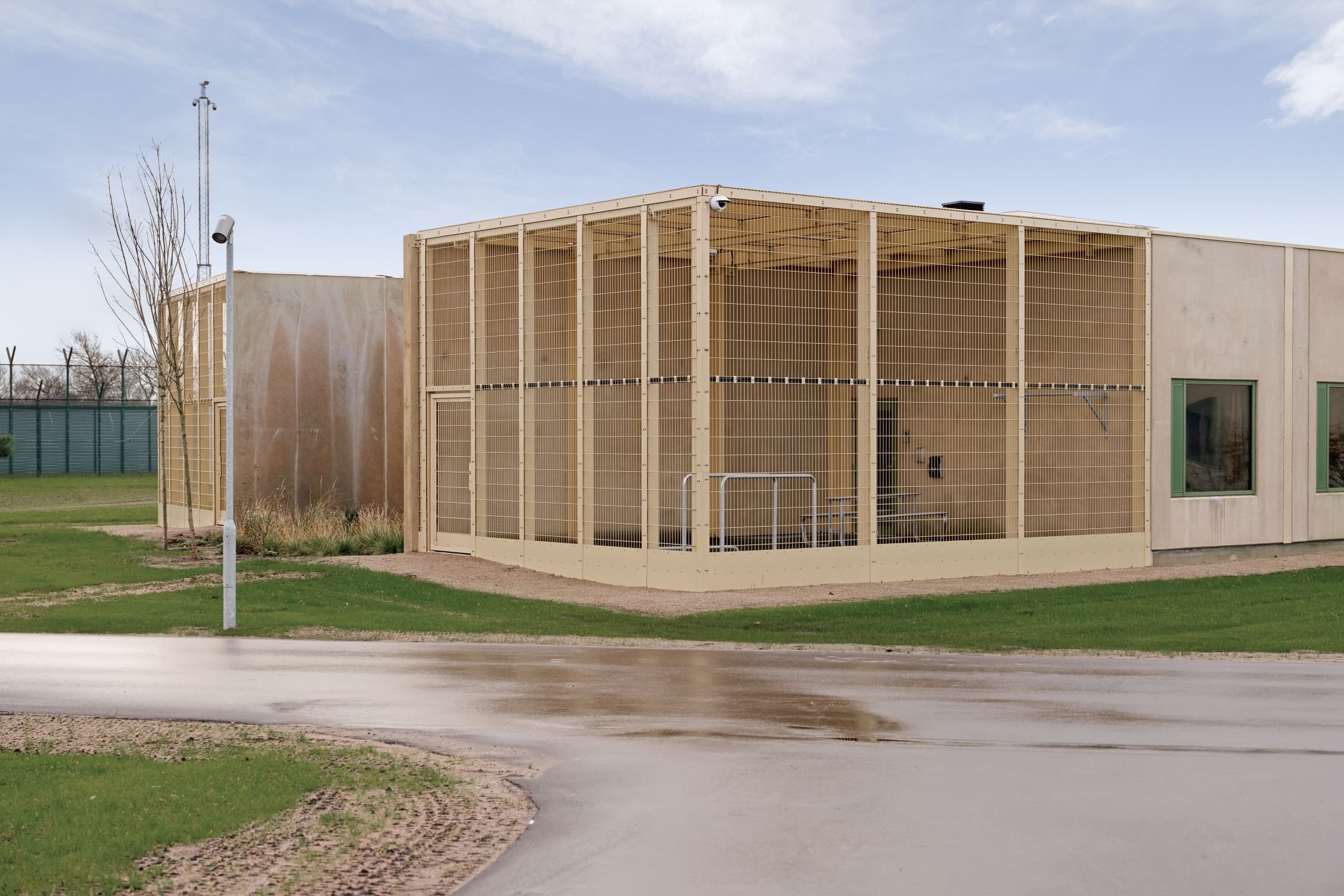
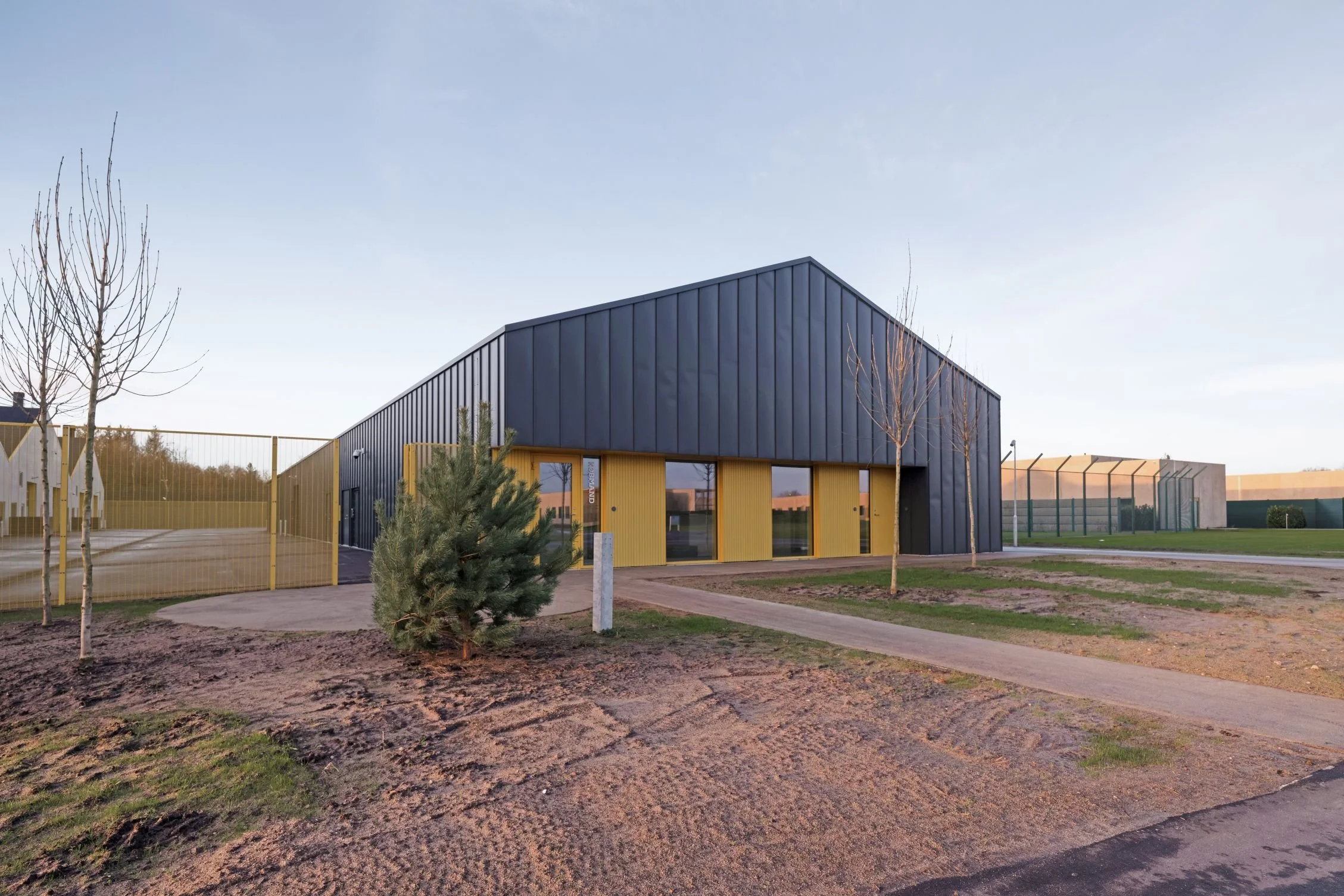
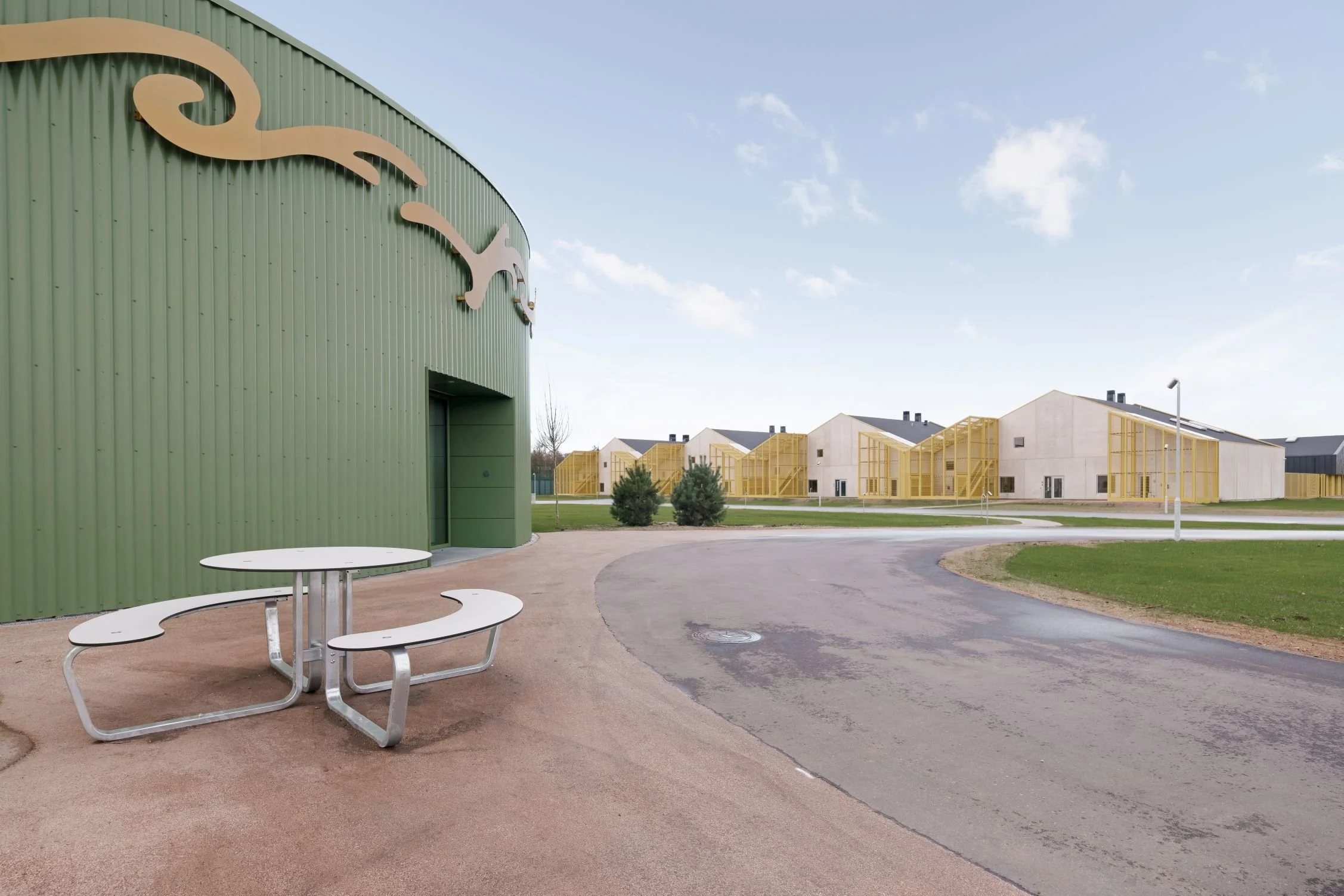
Sdr. Omme Prison has entered everyday use as a closed prison designed to accommodate 200 inmates, located adjacent to the existing open prison from 1933, which has a capacity of 222 inmates. Together, the open and closed facilities form Denmark’s largest prison in terms of total capacity, bringing daily operations for both units together on one site.
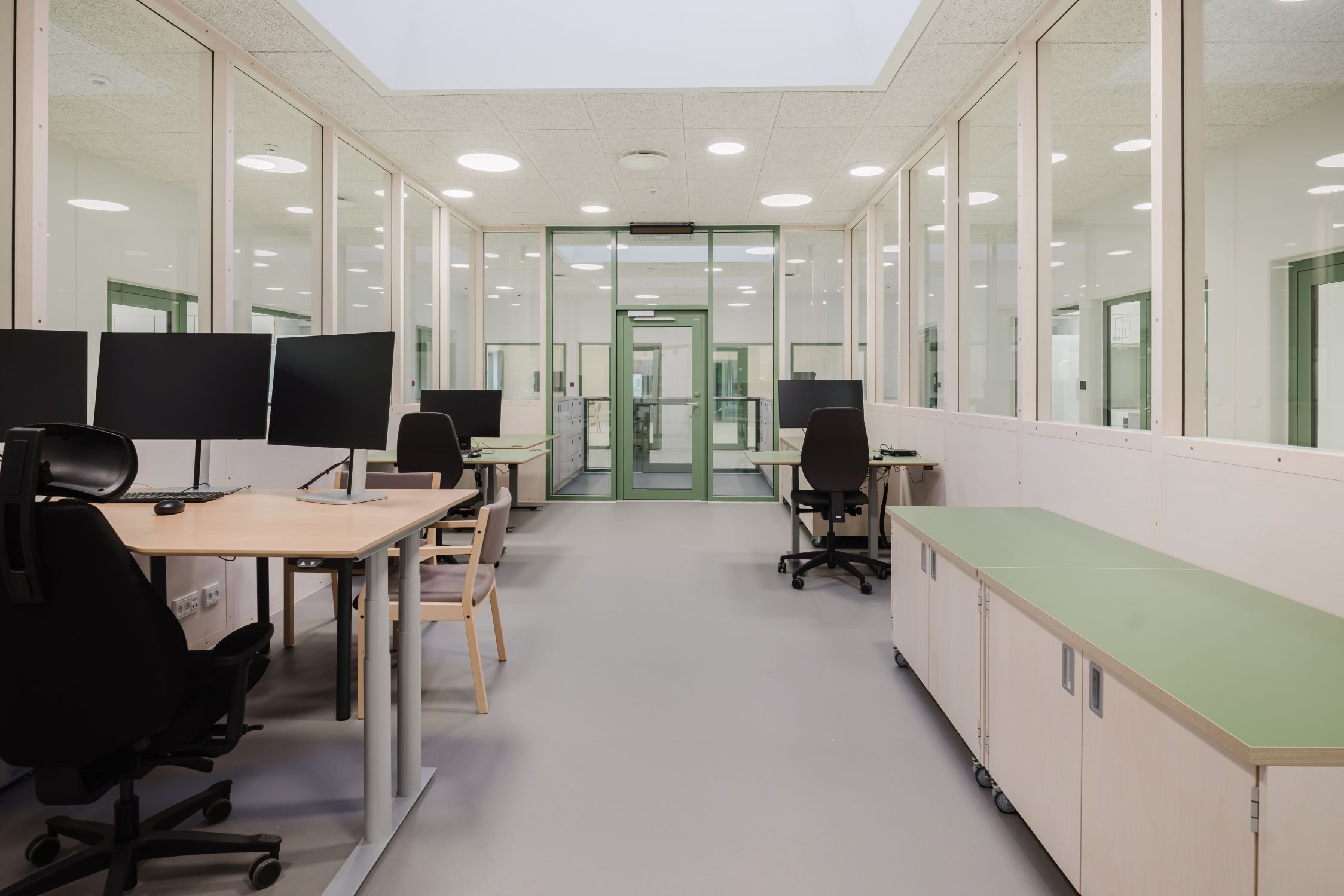
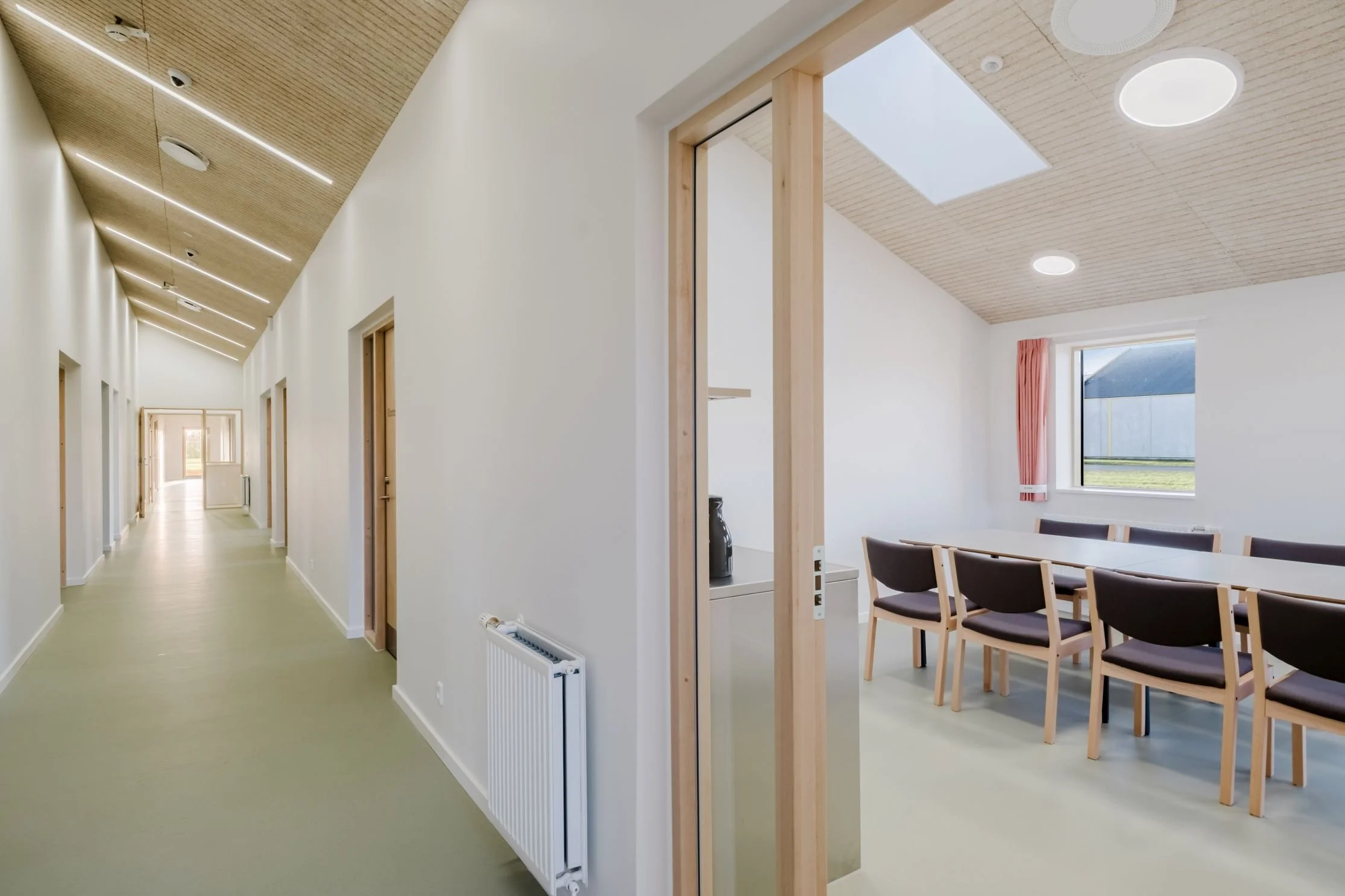
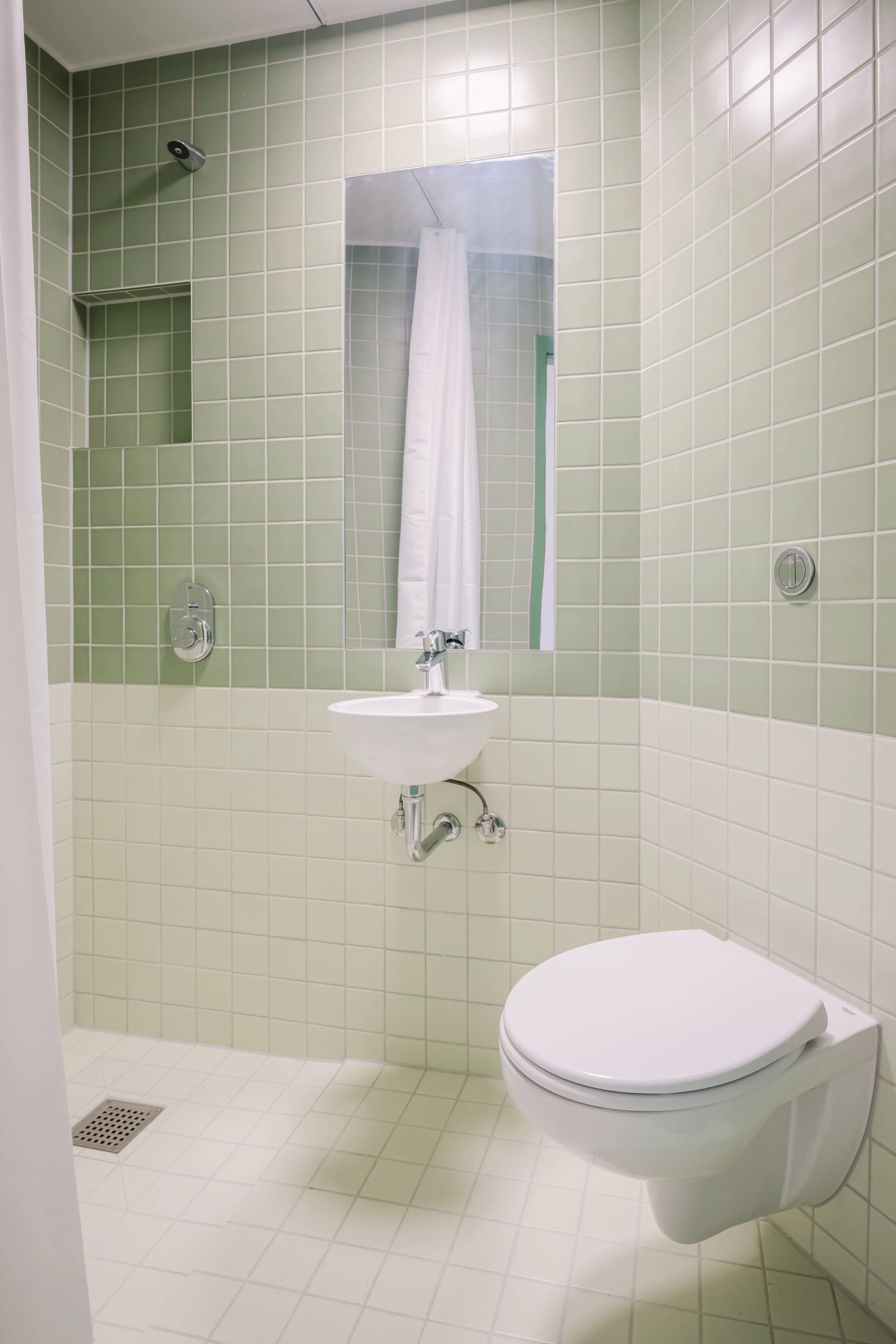
The prison is designed to balance high standards for staff working environments with opportunities for inmate employment, education, and recreation. Architectural solutions, construction methods, and material choices prioritize safety, durability, and long-term robustness, supporting efficient operation and minimizing maintenance over time. Within this framework, the prison provides well-functioning spaces that support everyday routines, clear movement, and humane conditions in a highly secured setting.
Nature and biophilic design
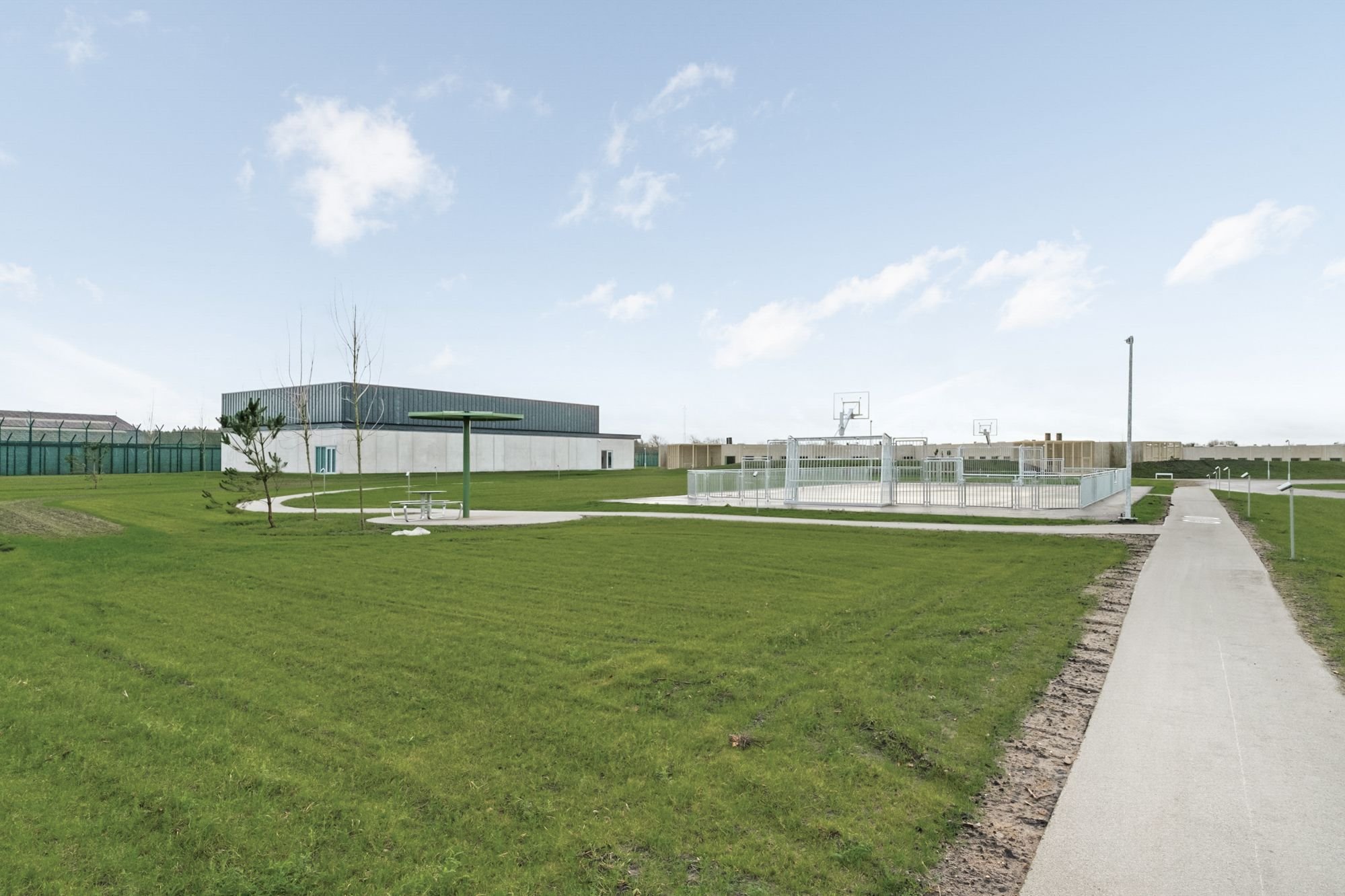
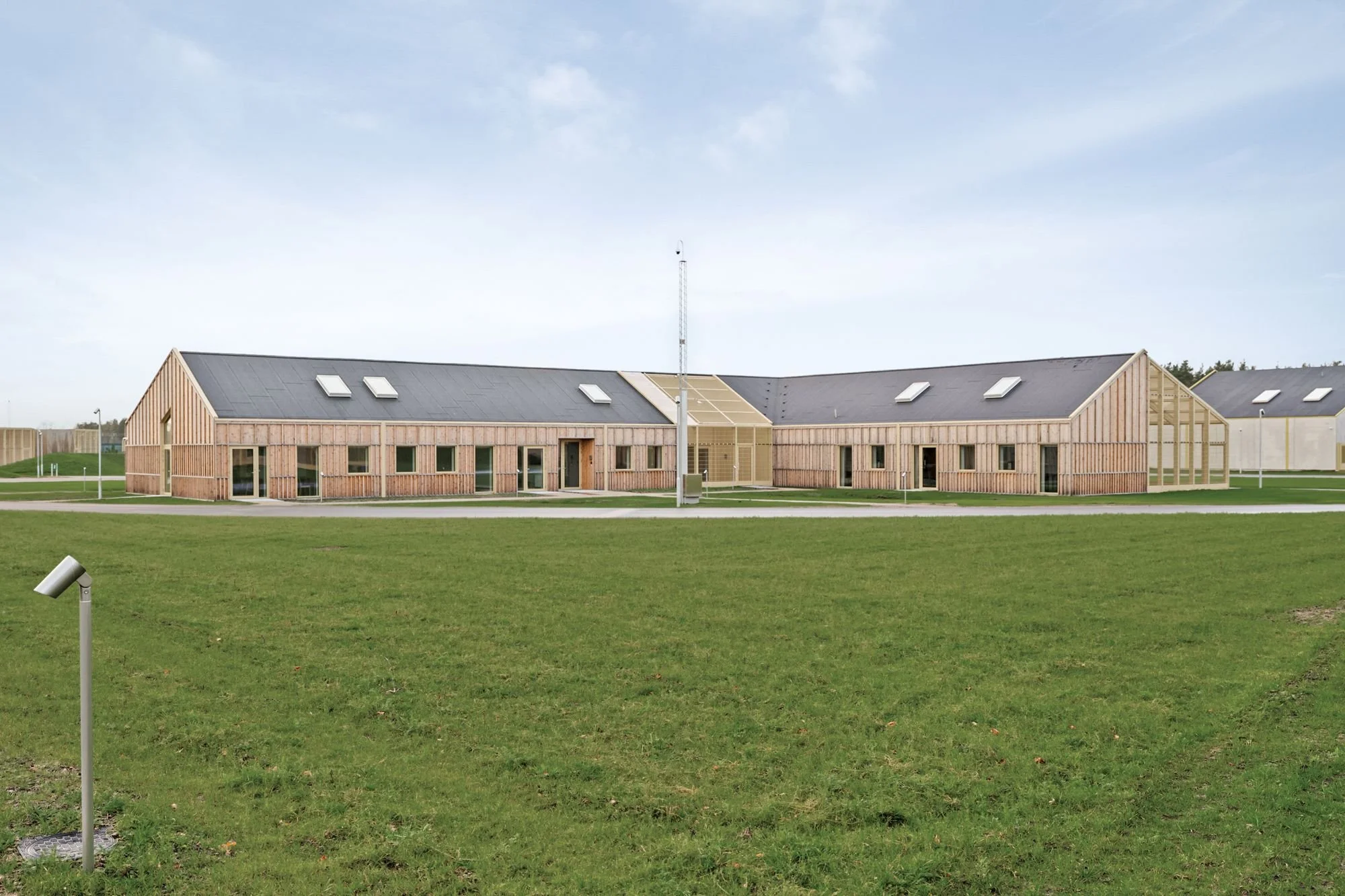
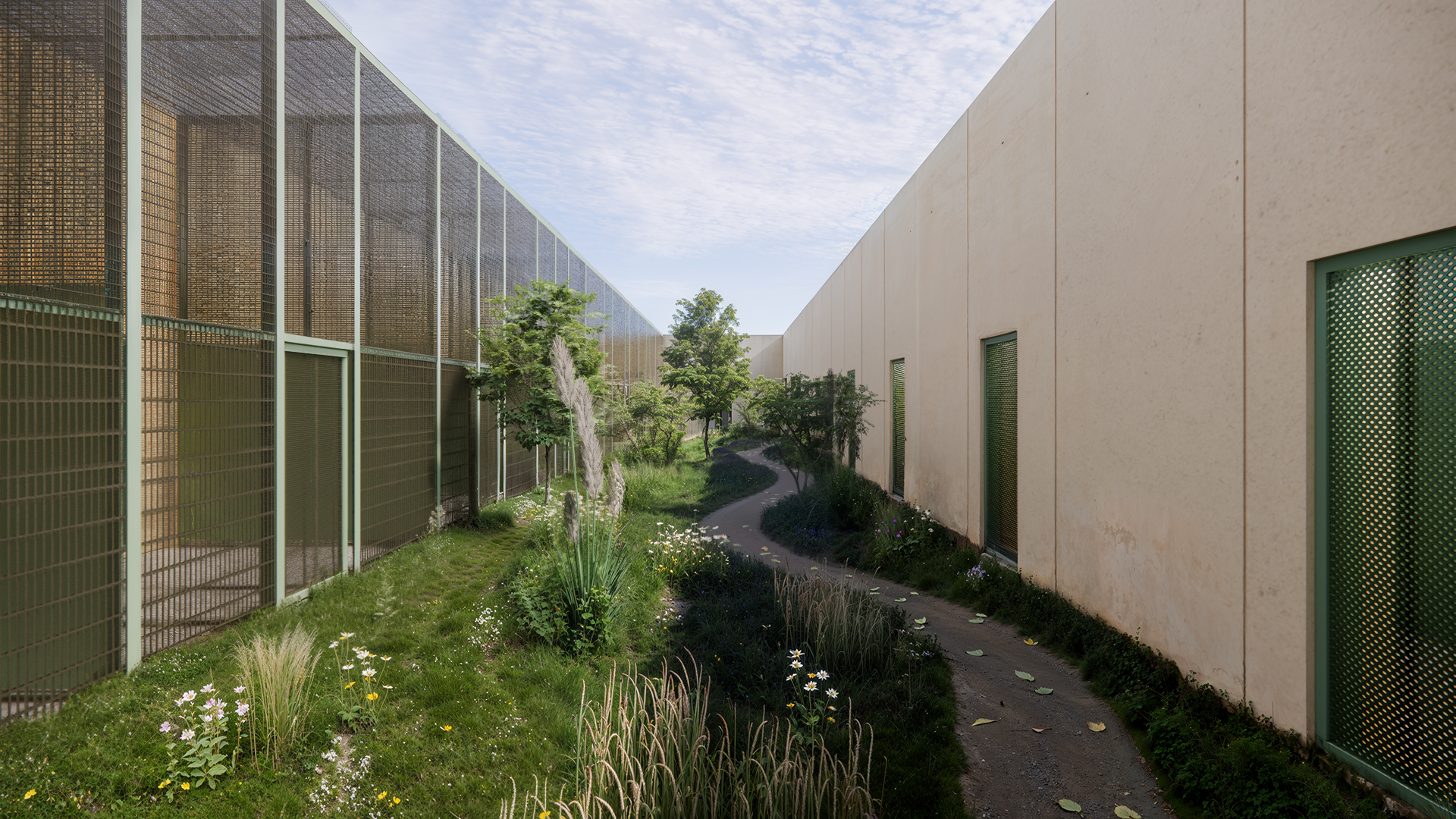
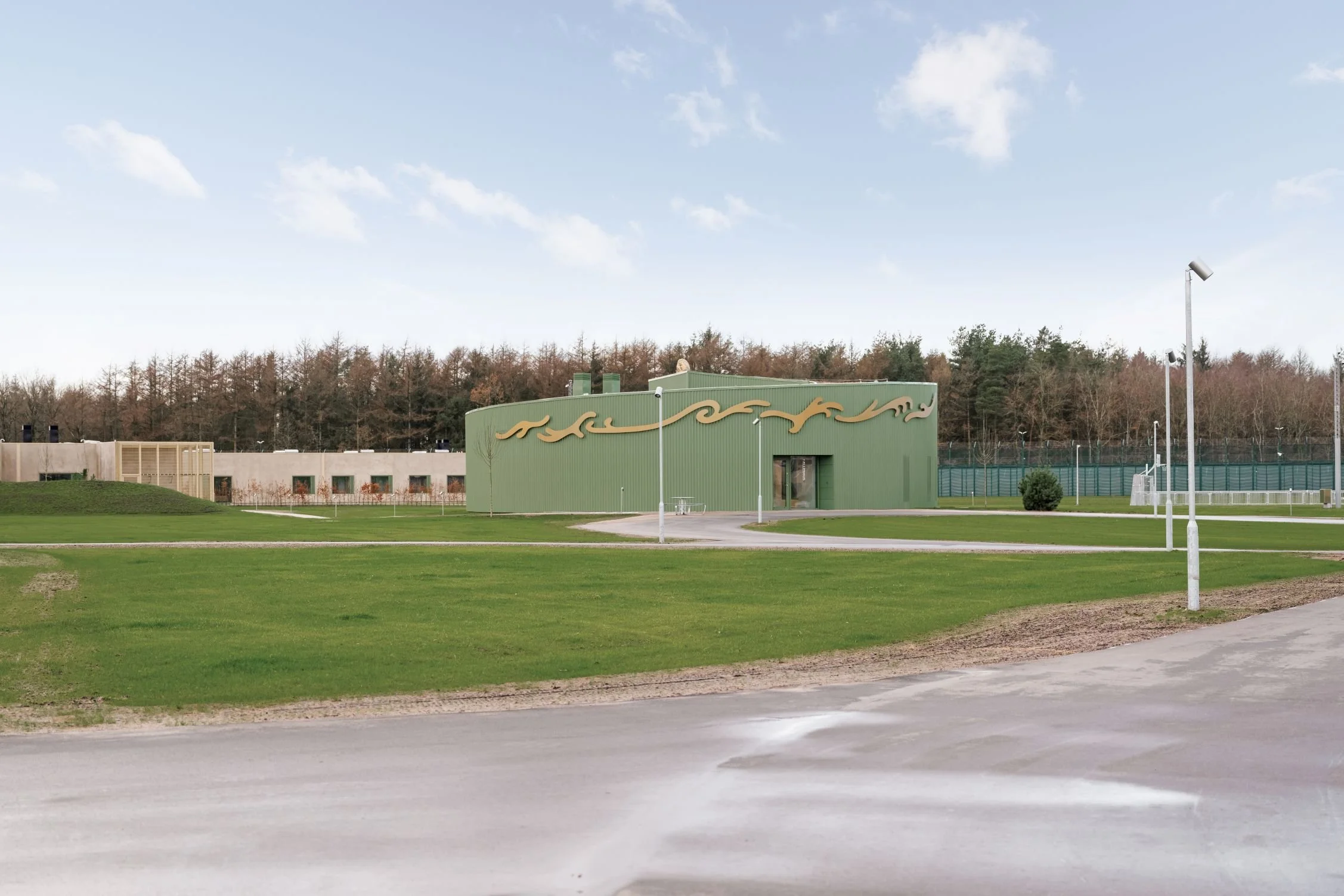
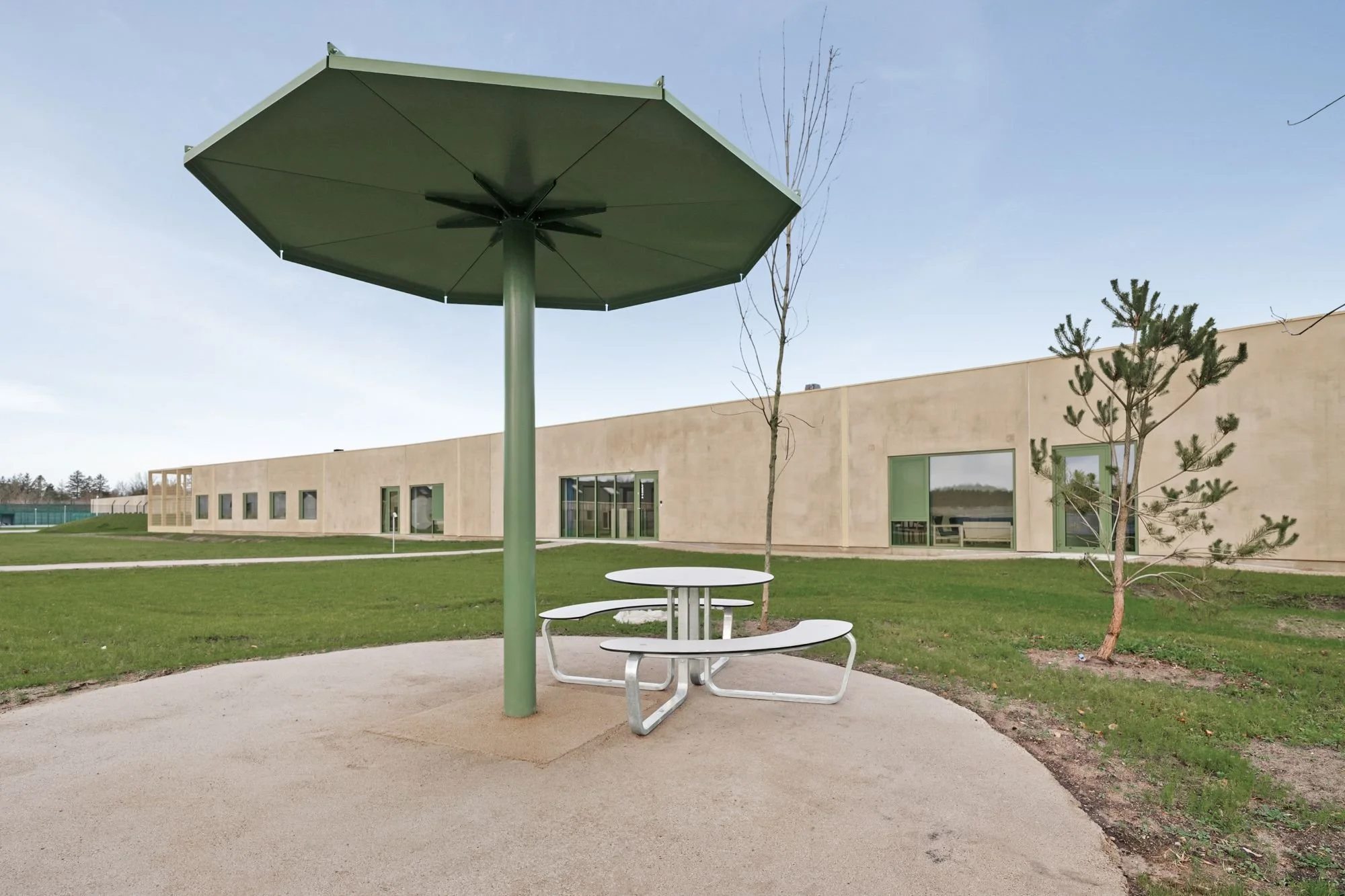
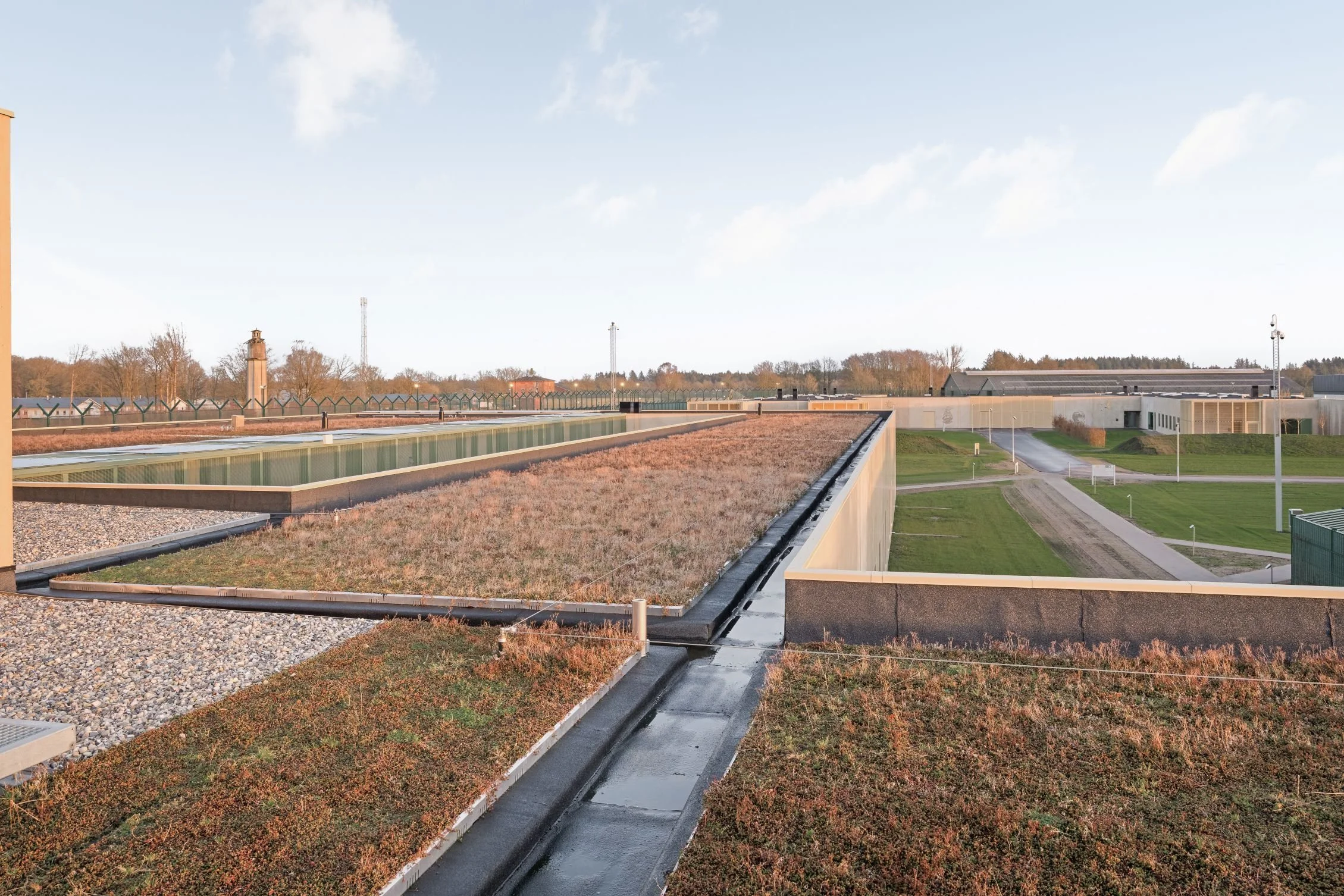
Nestled in the picturesque heath landscape, Sdr. Omme Prison integrates the surrounding natural beauty and biodiversity into its design. Native vegetation, living hedges, and carefully curated building aesthetics—including a harmonious colour palette—enhance the sensory experience for both inmates and staff. These biophilic design principles aim to create a calming and stimulating environment within the secured perimeter, strengthening nature integration and contributing to more humane environments.
Facts
-
Lead Consultant
Architect
Construction management
-
The Danish Prison and Probation Service
-
Sdr. Omme, Denmark
-
20,000 m²
-
Completed in 2025
-
Viborg Ingeniørerne
BARA-Land
COWI/Rambøll
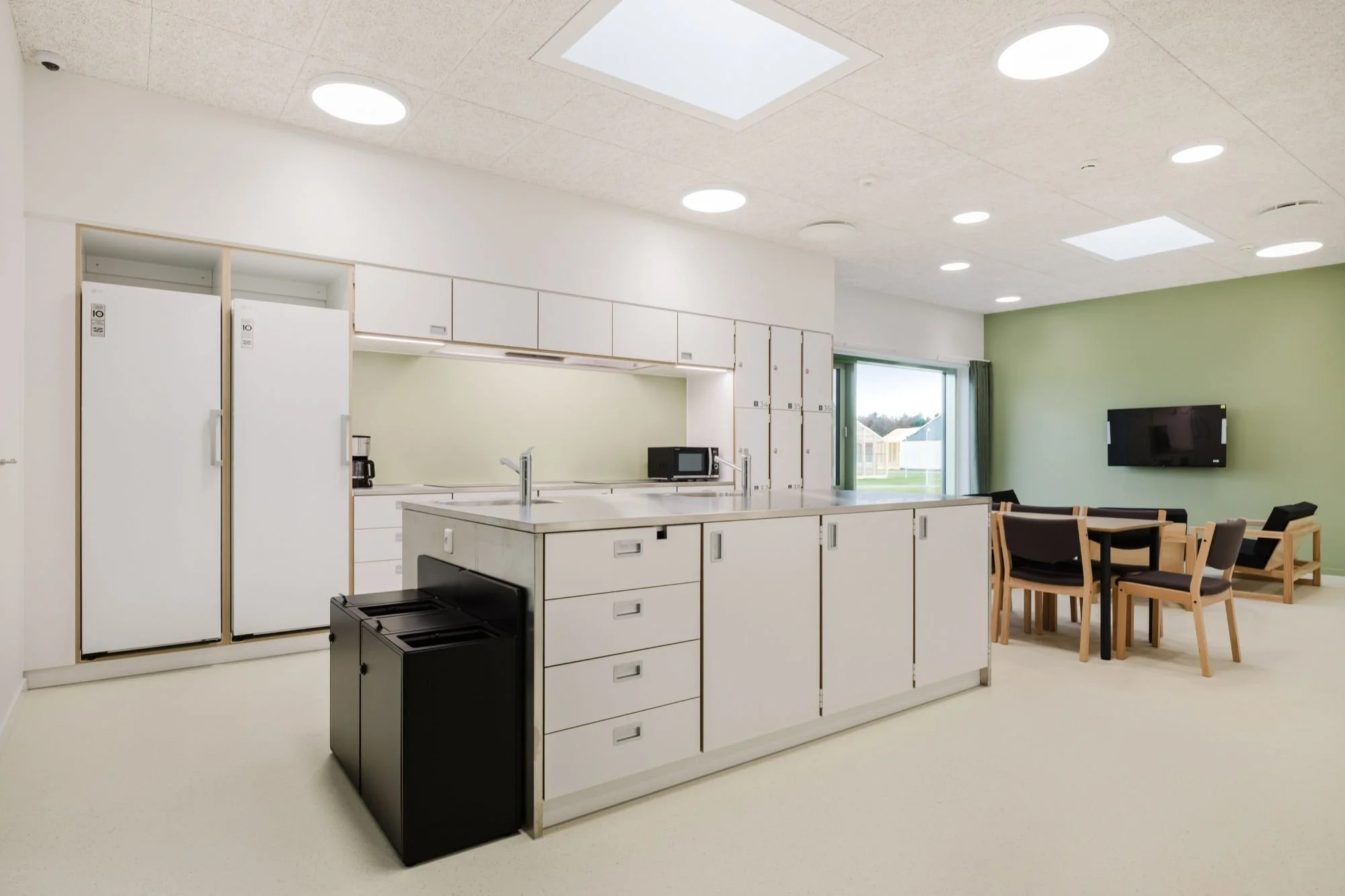
Focus on normalization
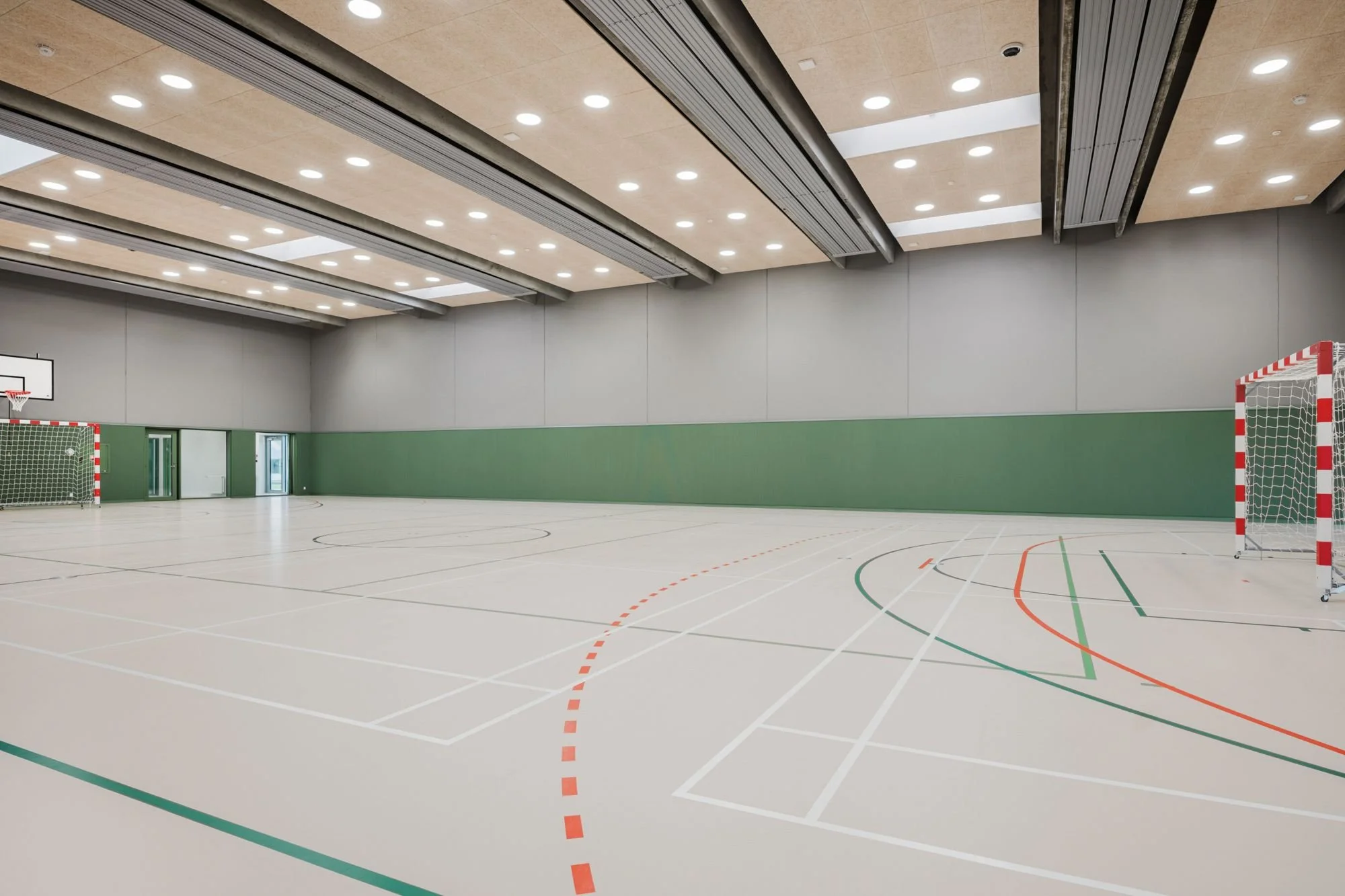
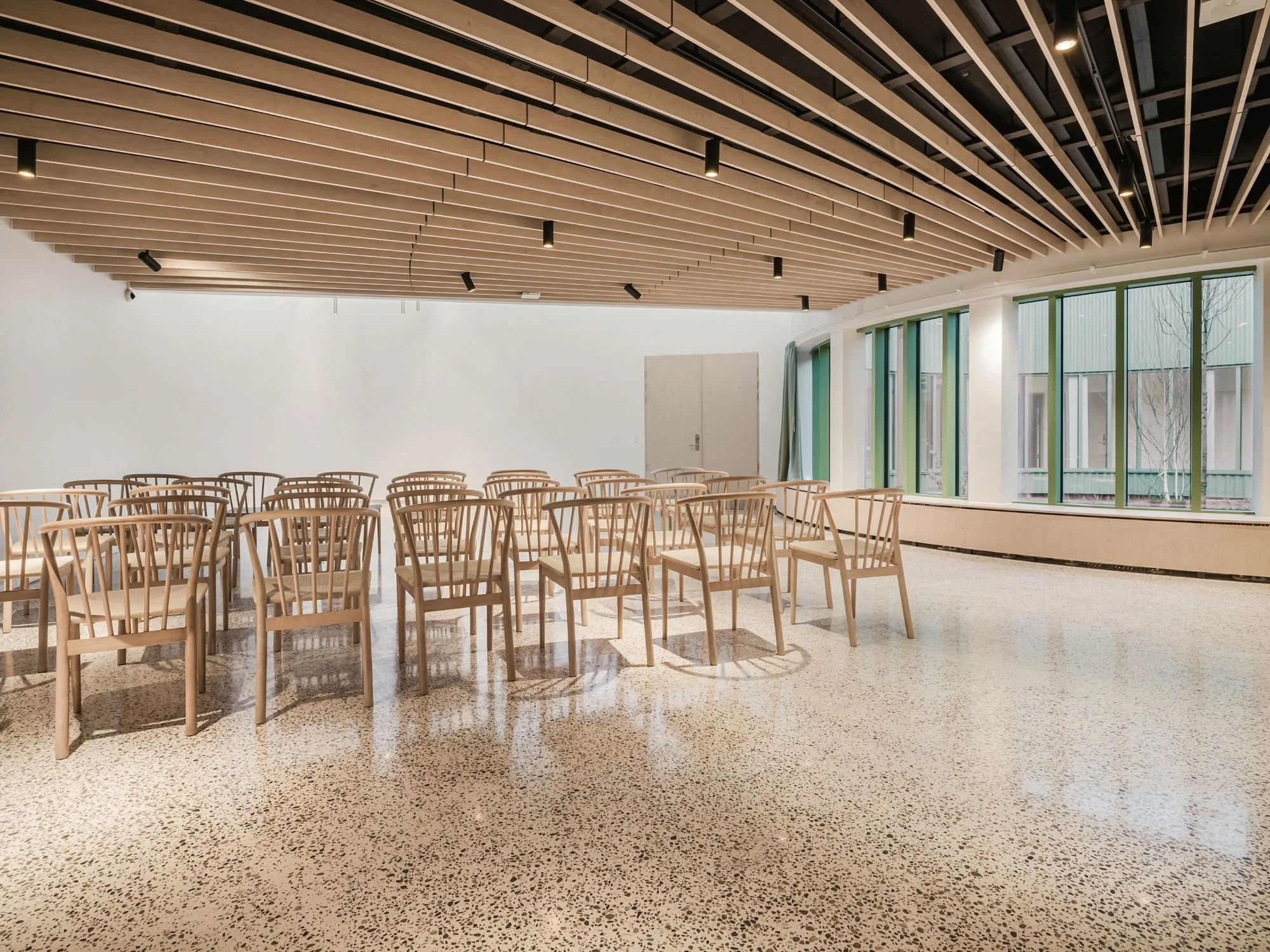
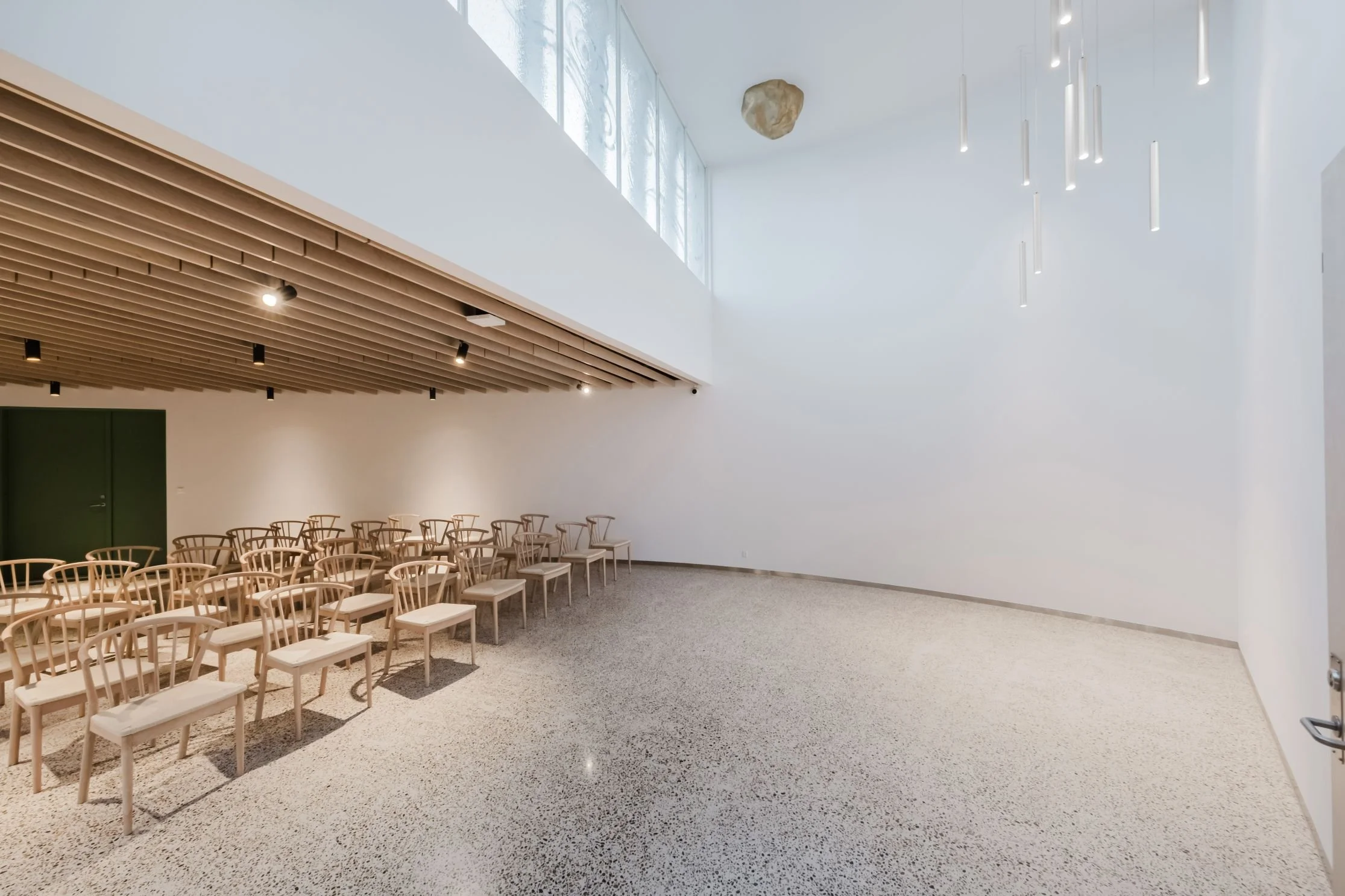
Sdr. Omme Prison emphasizes normalization by offering opportunities for inmates to engage in meaningful activities. Workshops, educational facilities, treatment programs, and recreational areas are designed to mimic everyday life and foster a sense of purpose. Common spaces for gatherings, spiritual practices, and indoor and outdoor sports further enhance inmates’ motivation and self-confidence, laying the foundation for successful reintegration into society after release.

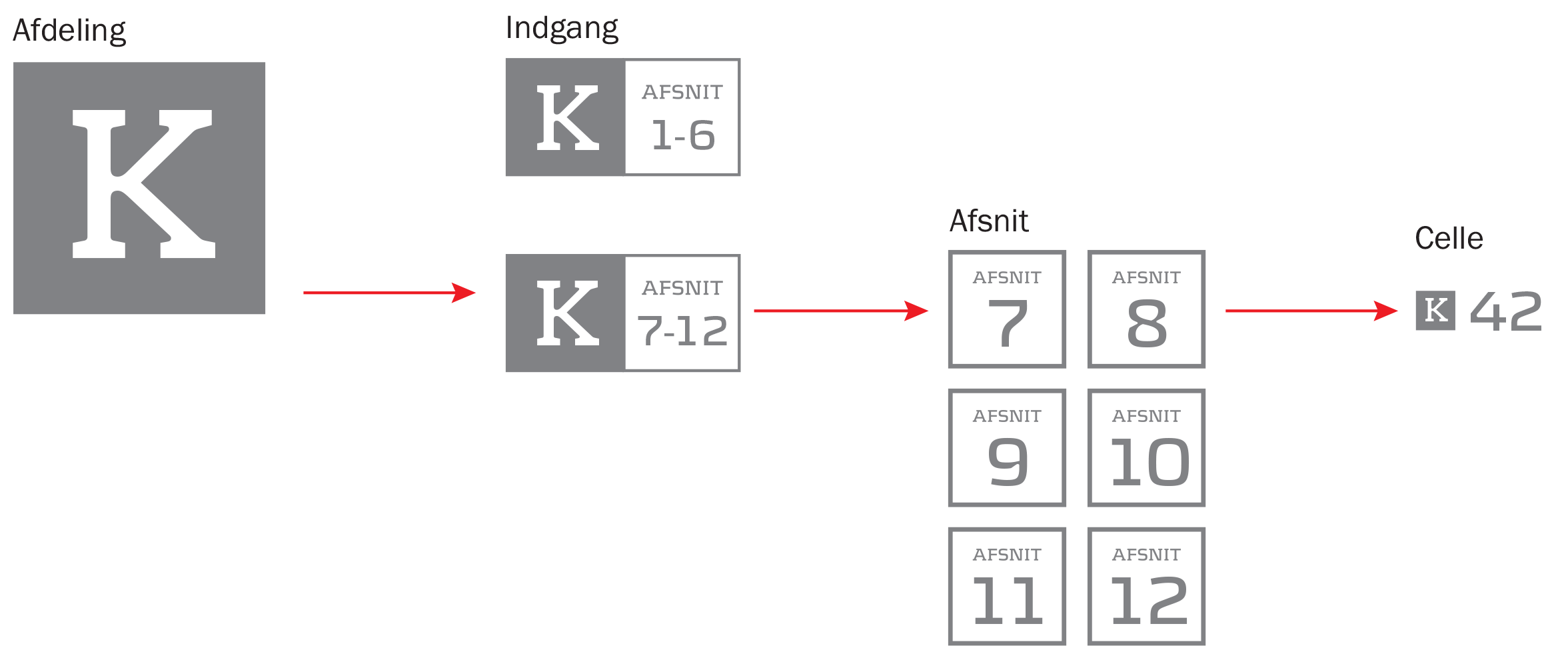
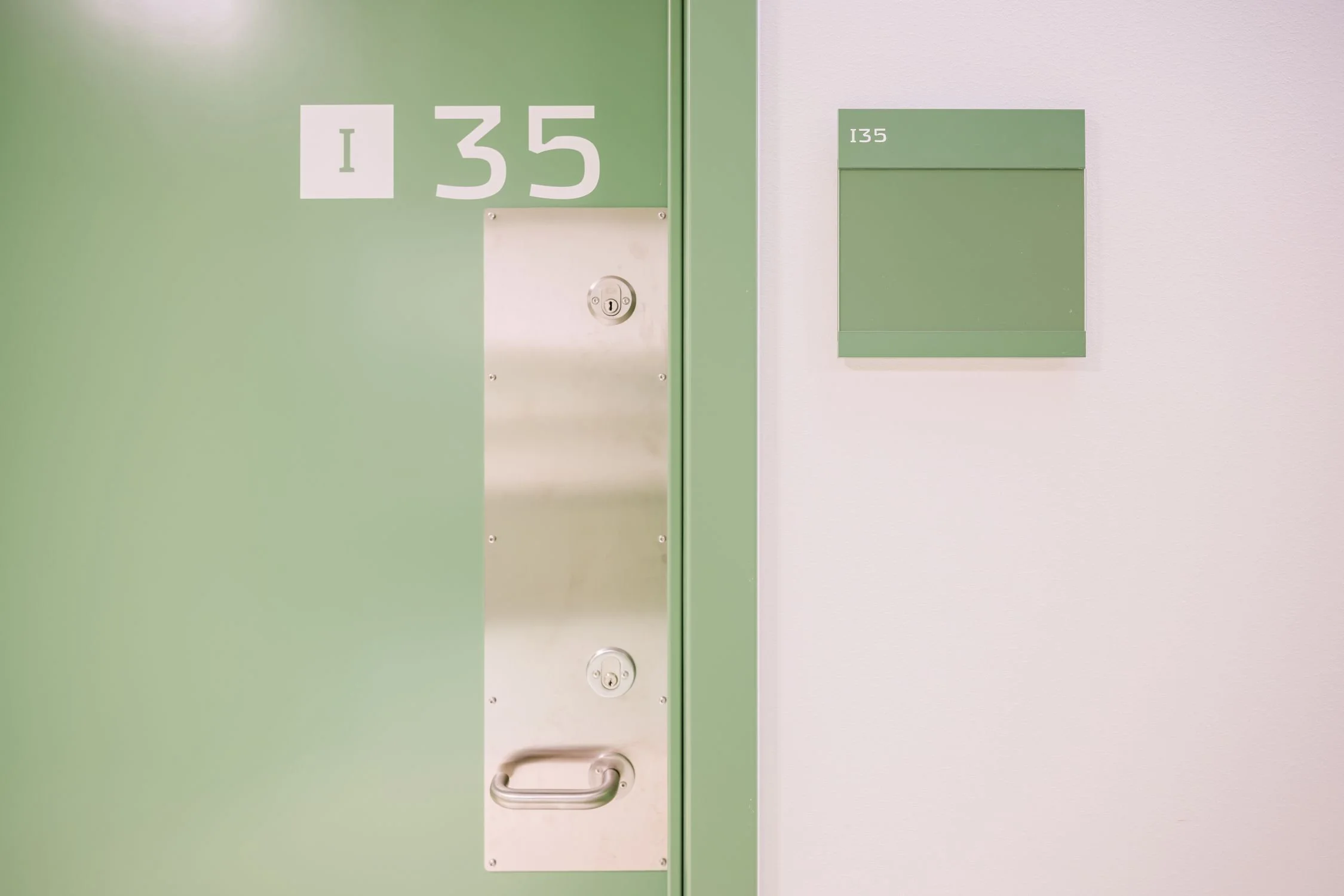
Intuitive signage
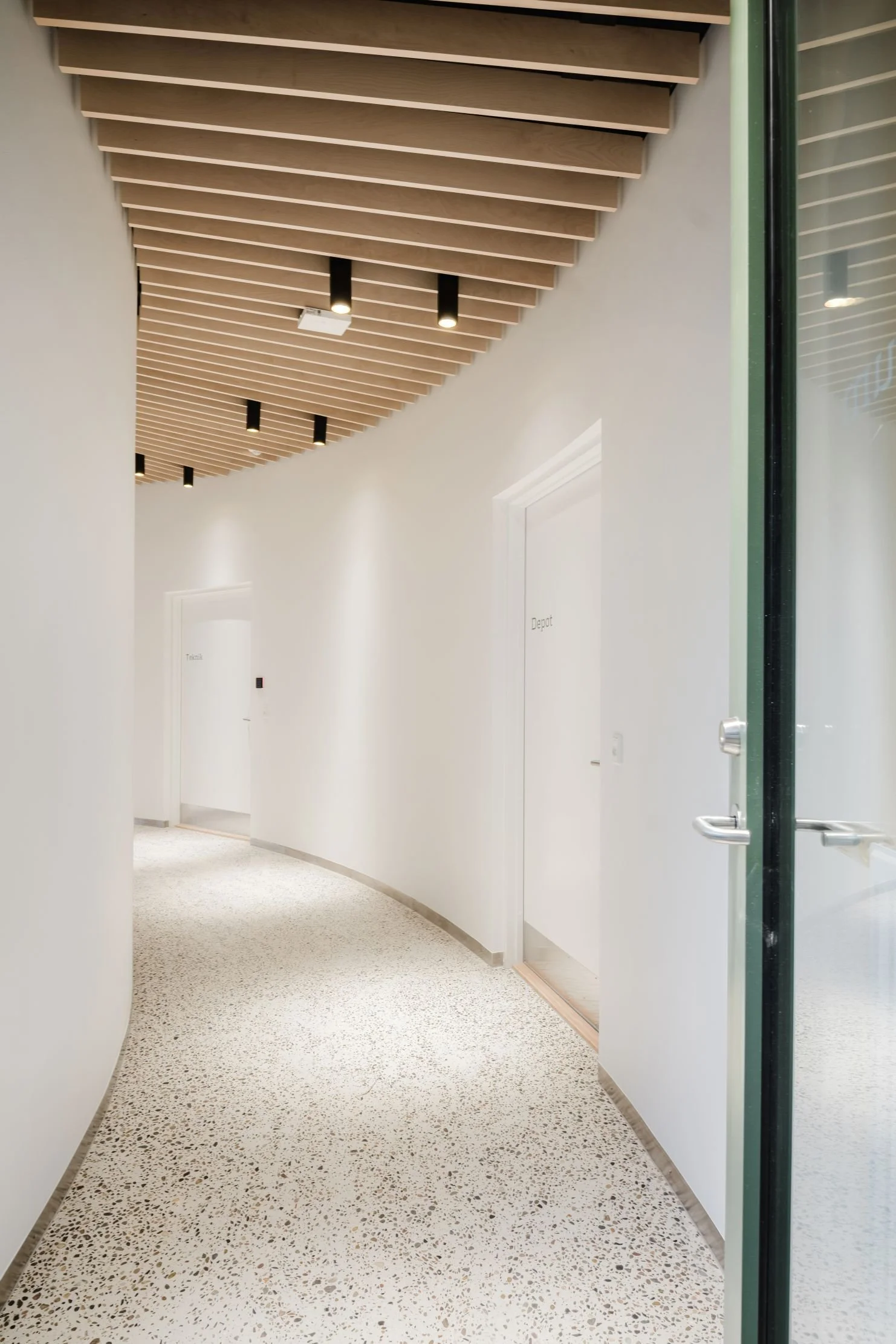
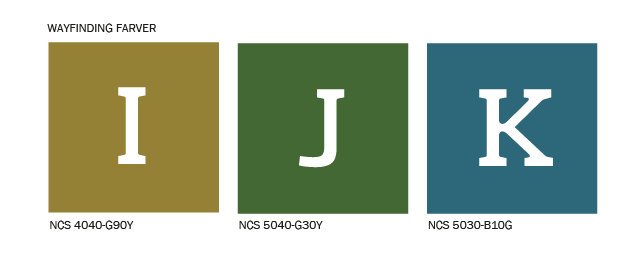
Wayfinding is a key consideration in the prison’s design, with an intuitive signage system that helps visitors, inmates, and staff easily navigate the facility. Colour coding, varied text sizes, and strategically placed signs ensure that critical information is accessible at a glance, supporting efficient and confident movement throughout the prison.
Enhanced working environment
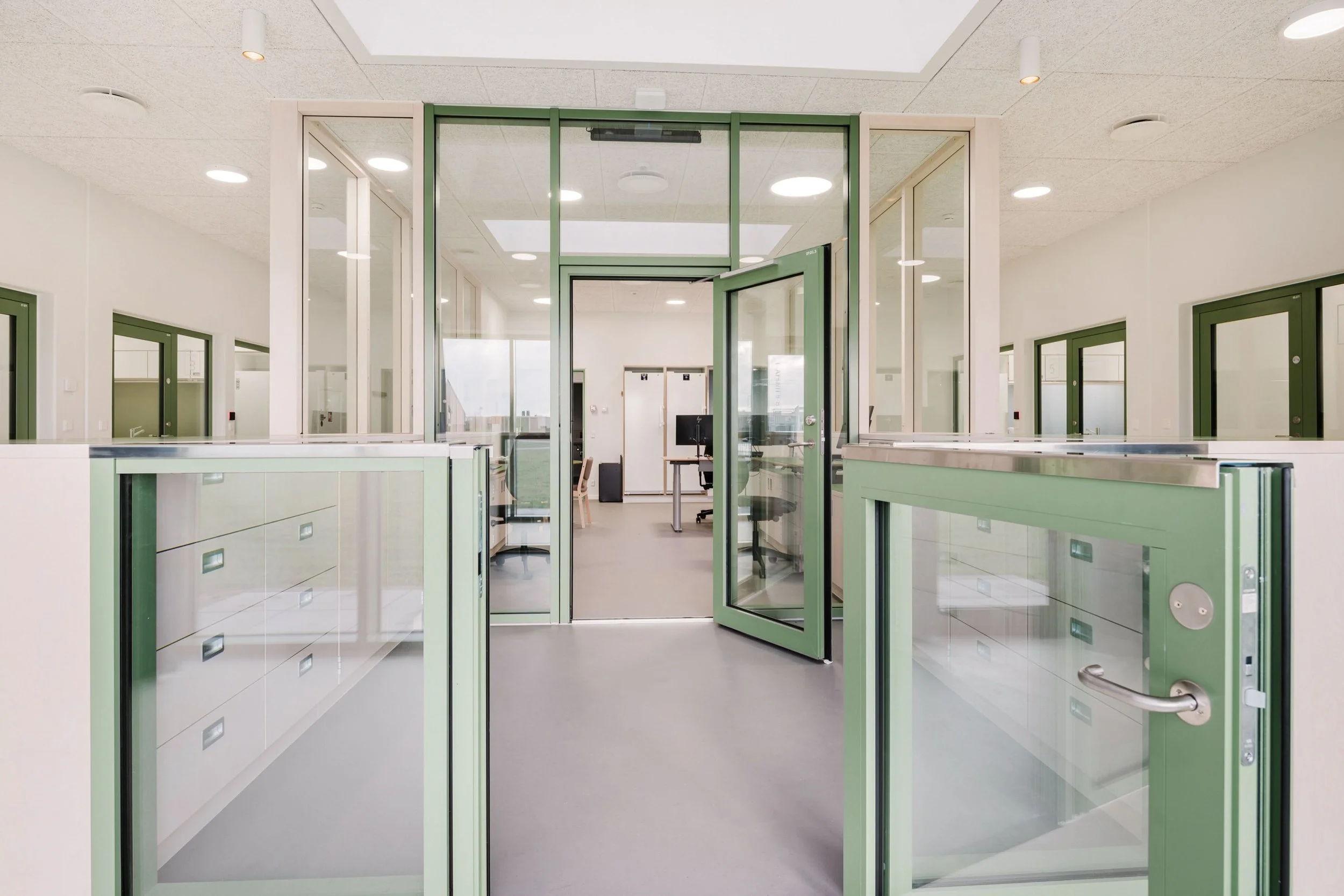
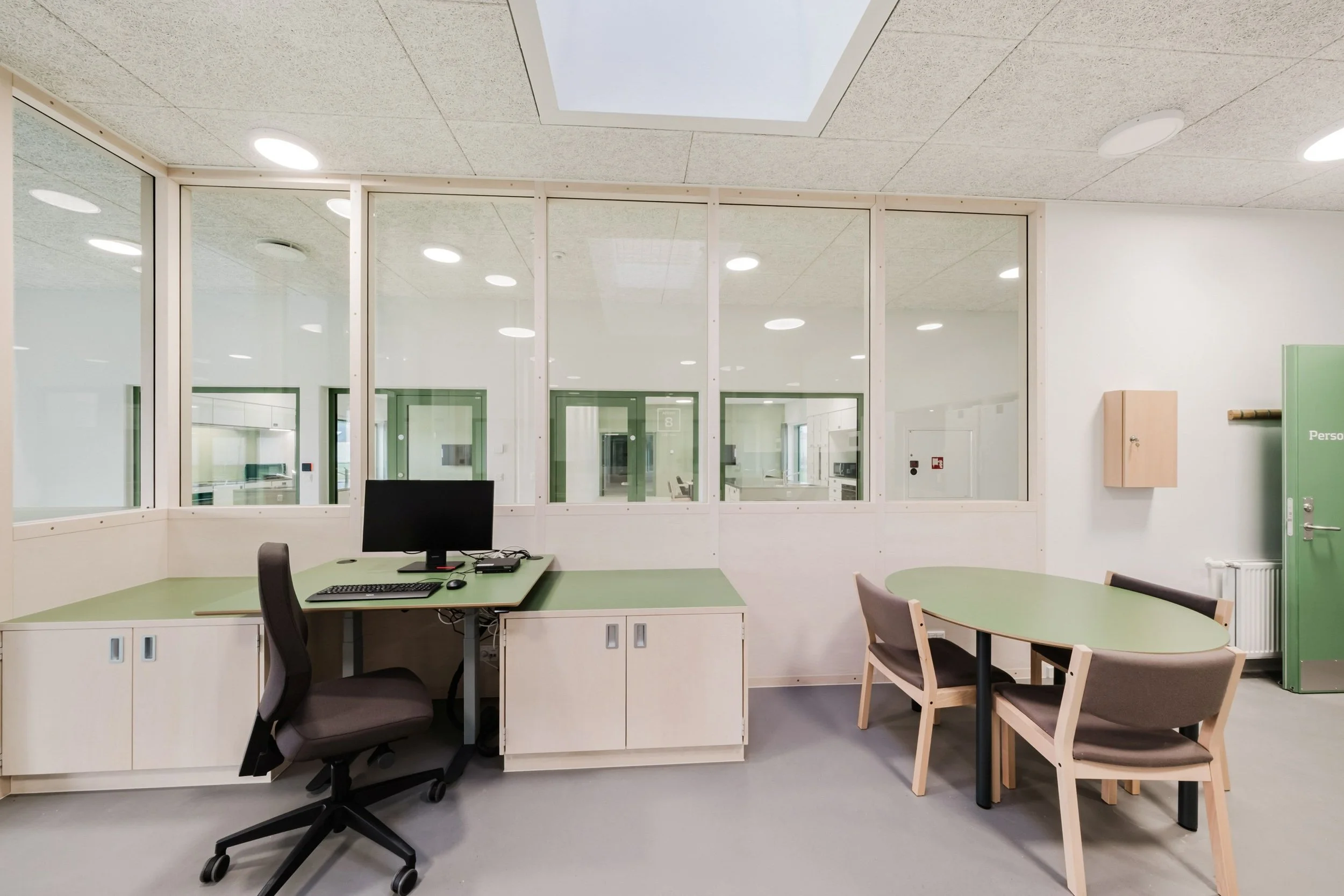
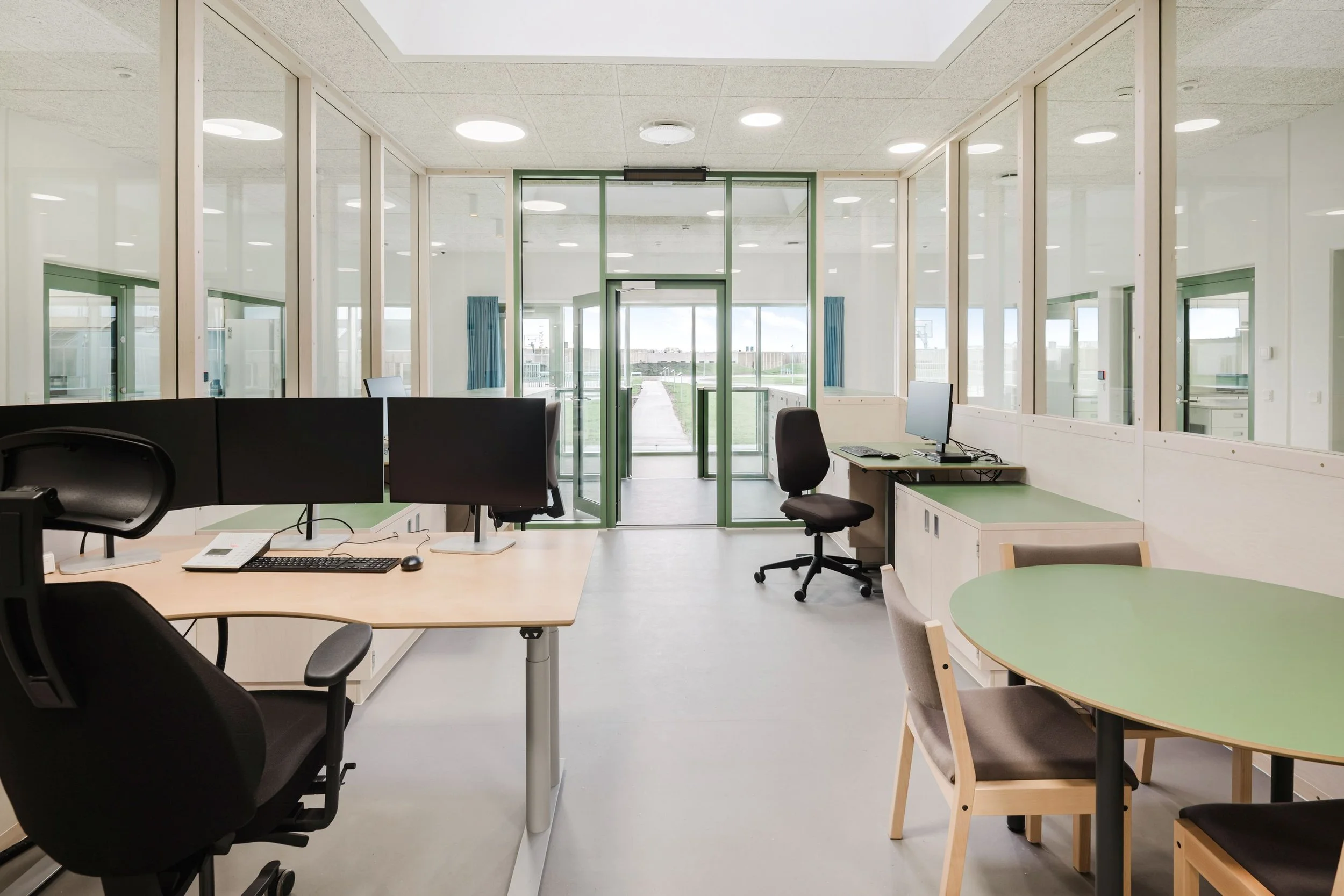
The prison’s layout promotes a healthy working environment by incorporating visual openness and proximity among common functions. These design elements encourage natural interactions between staff and inmates, a critical factor in maintaining dynamic security. This approach fosters positive relationships that support daily operational performance and contribute to a safer and more supportive atmosphere for all.
Flexibility and future-proofing
The building structures are designed with flexibility and multifunctionality, allowing them to adapt to changing standards across different regimes and security classifications. This adaptability ensures that the facilities can continue to support the most appropriate resocialisation efforts over time.
Light as a healing element
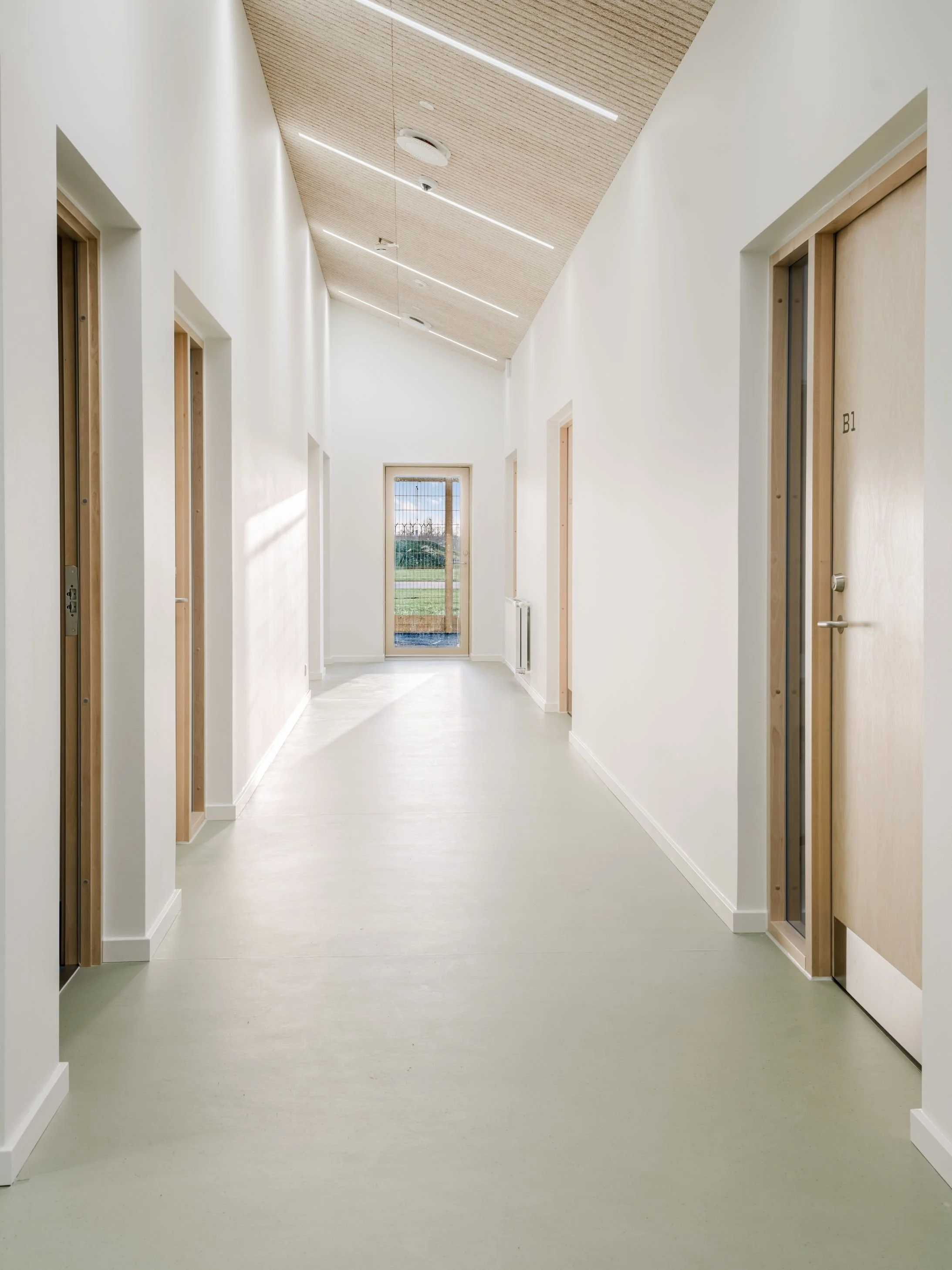
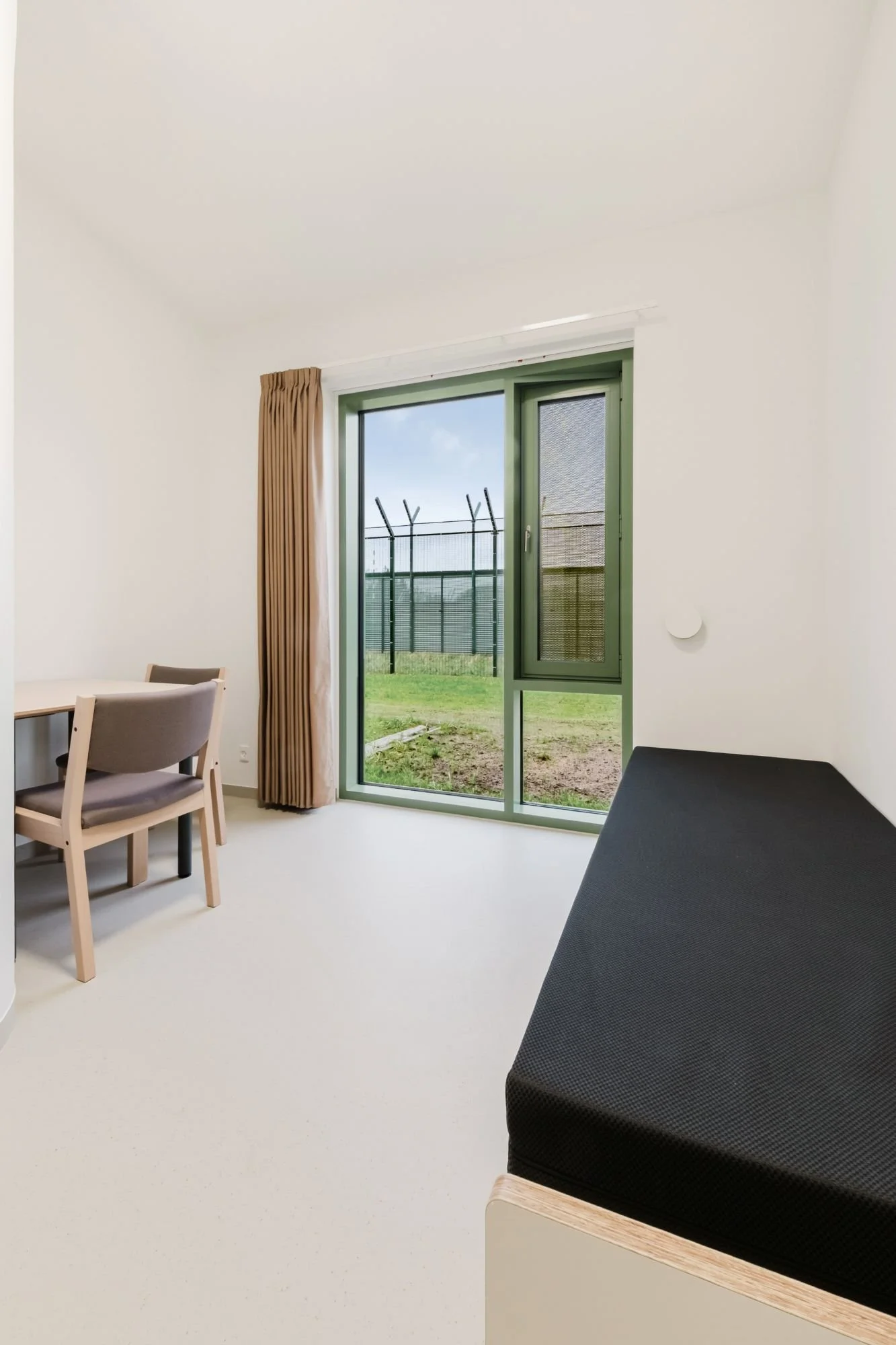
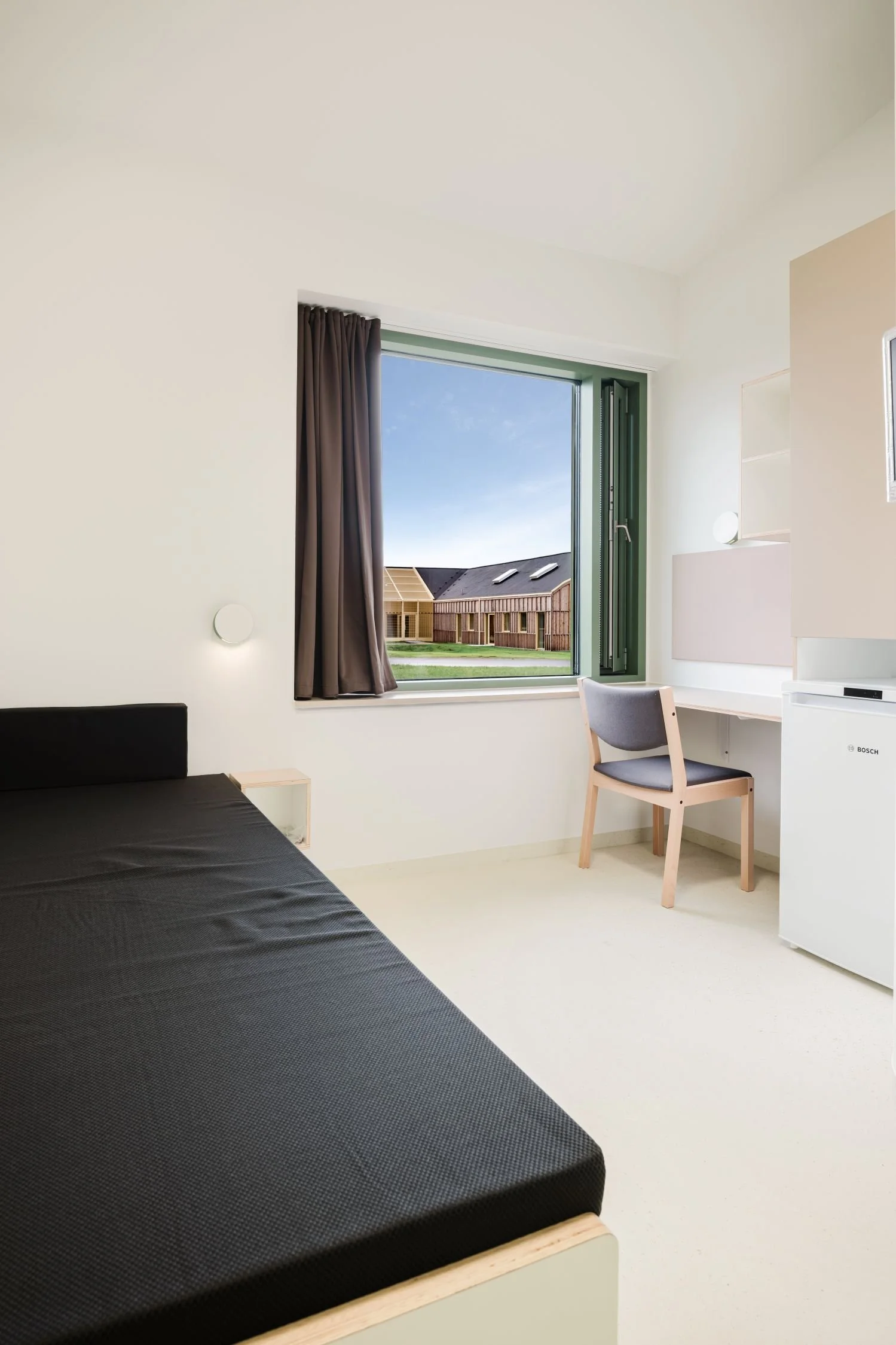
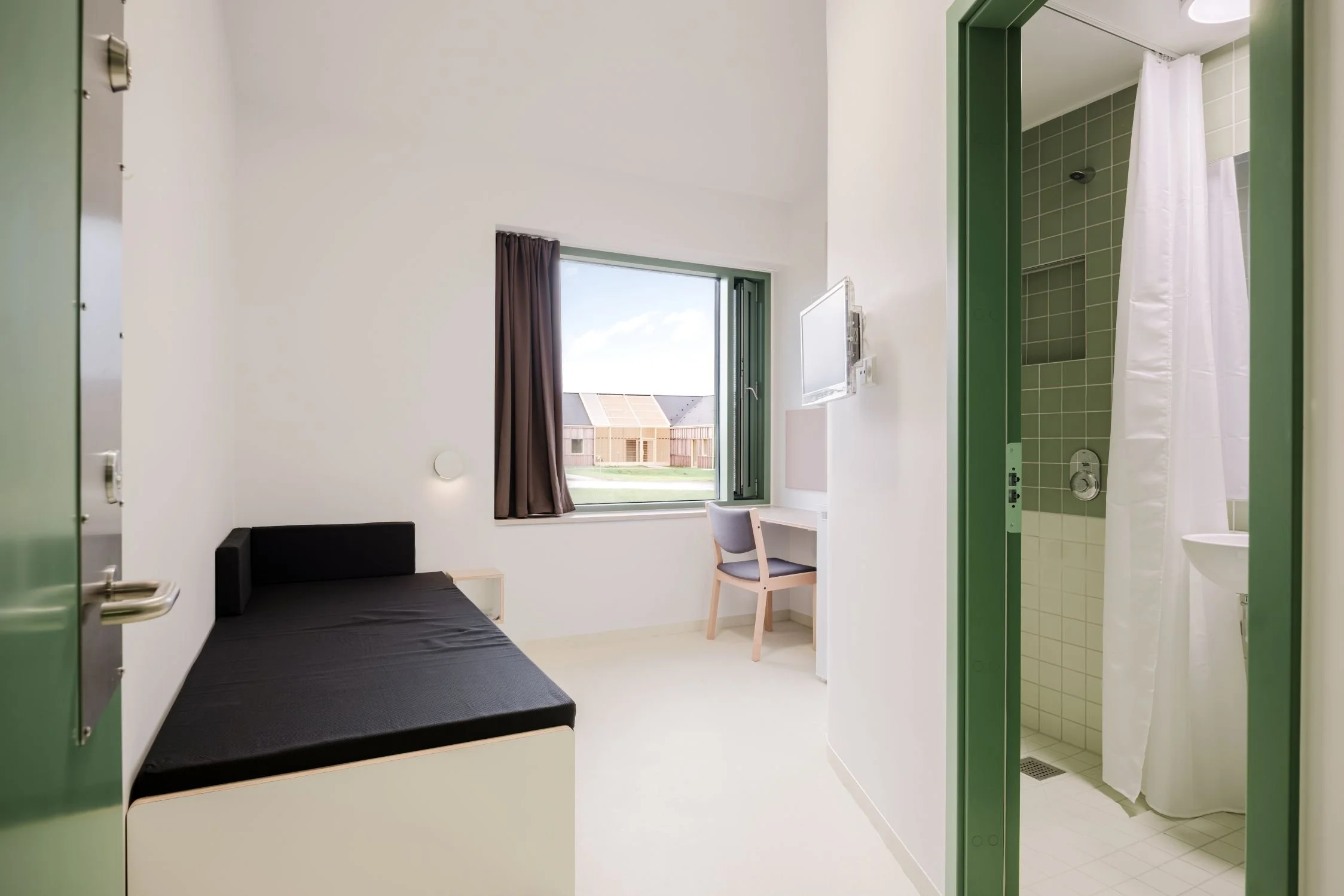
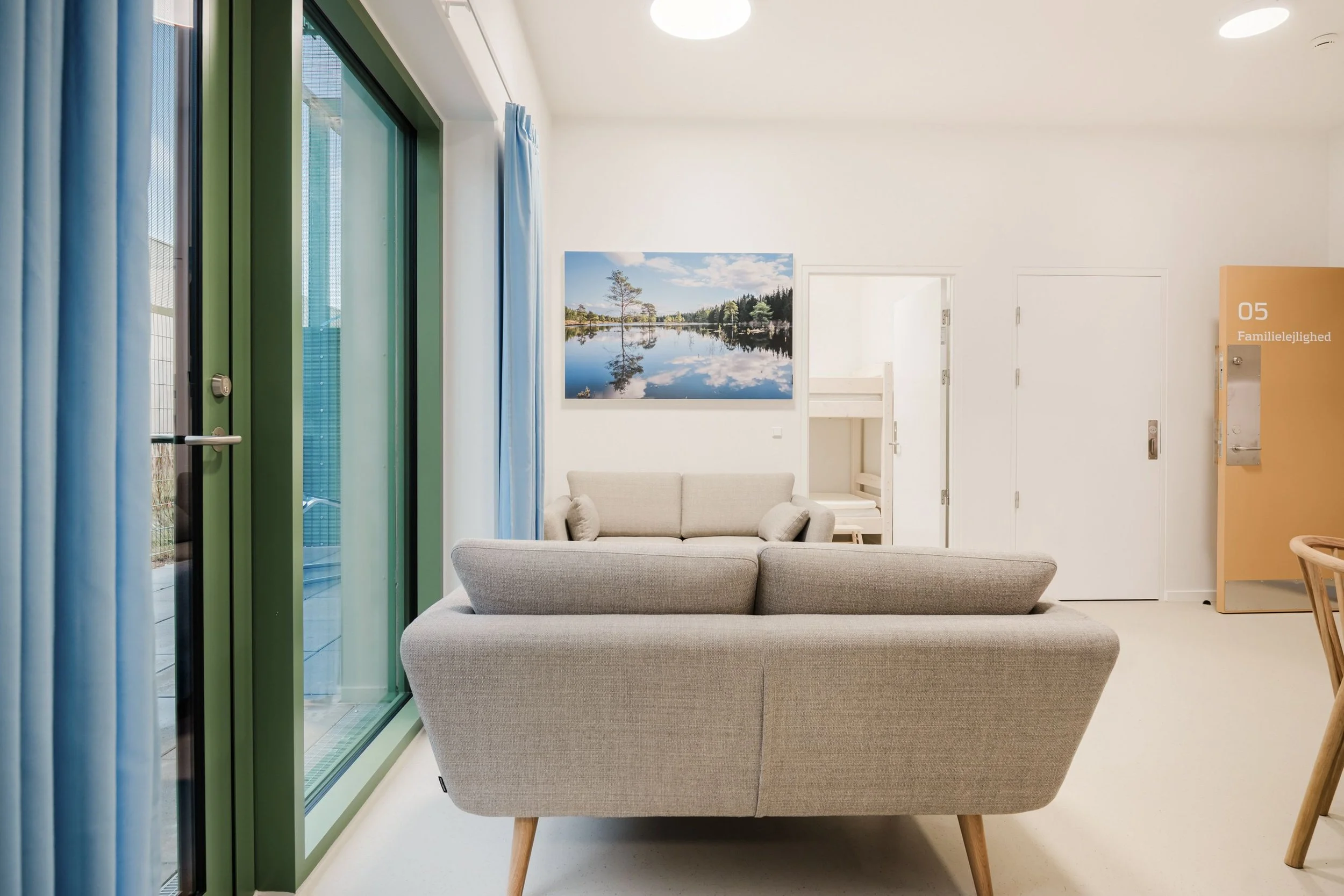
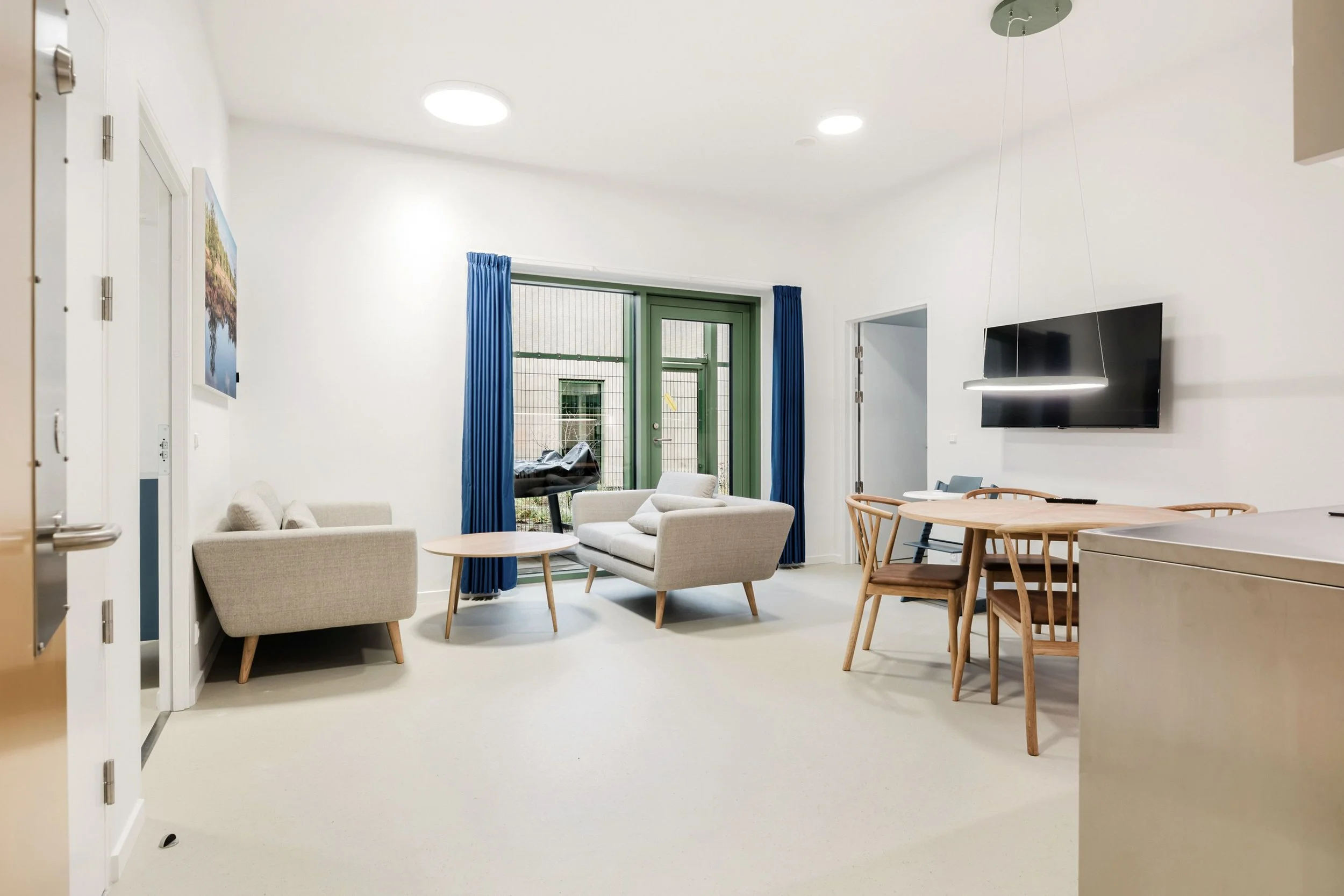
Cells and communal spaces are designed to make optimal use of daylight, not only meeting technical requirements but also creating spaces with a strong connection to the outside world and the natural circadian rhythm. Large glazed sections open up views of the surrounding landscape and bring nature into the buildings, counteracting the institutional sense of isolation.
Art as a catalyst for healing, dignity, and everyday life in a high-security environment
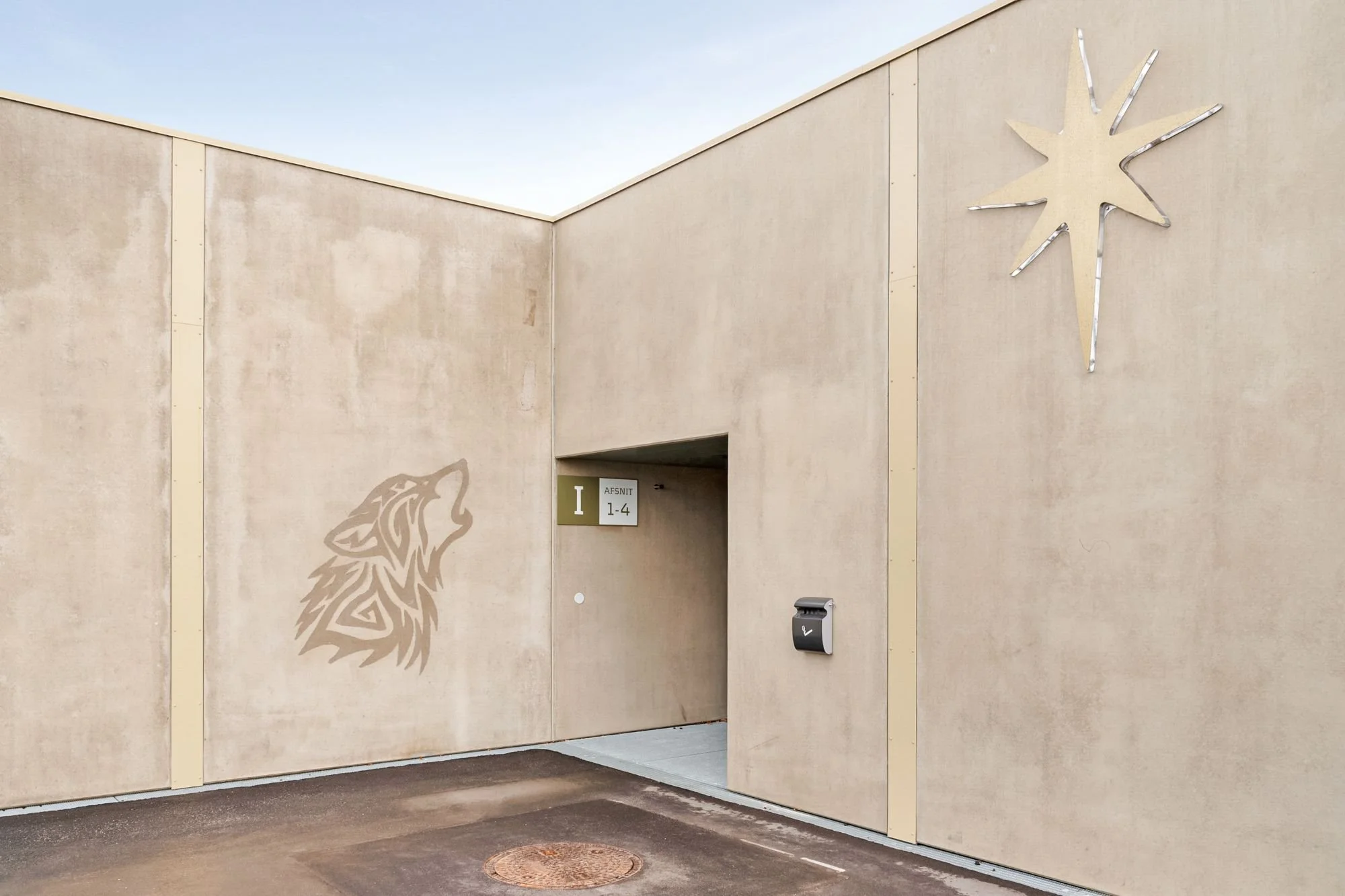
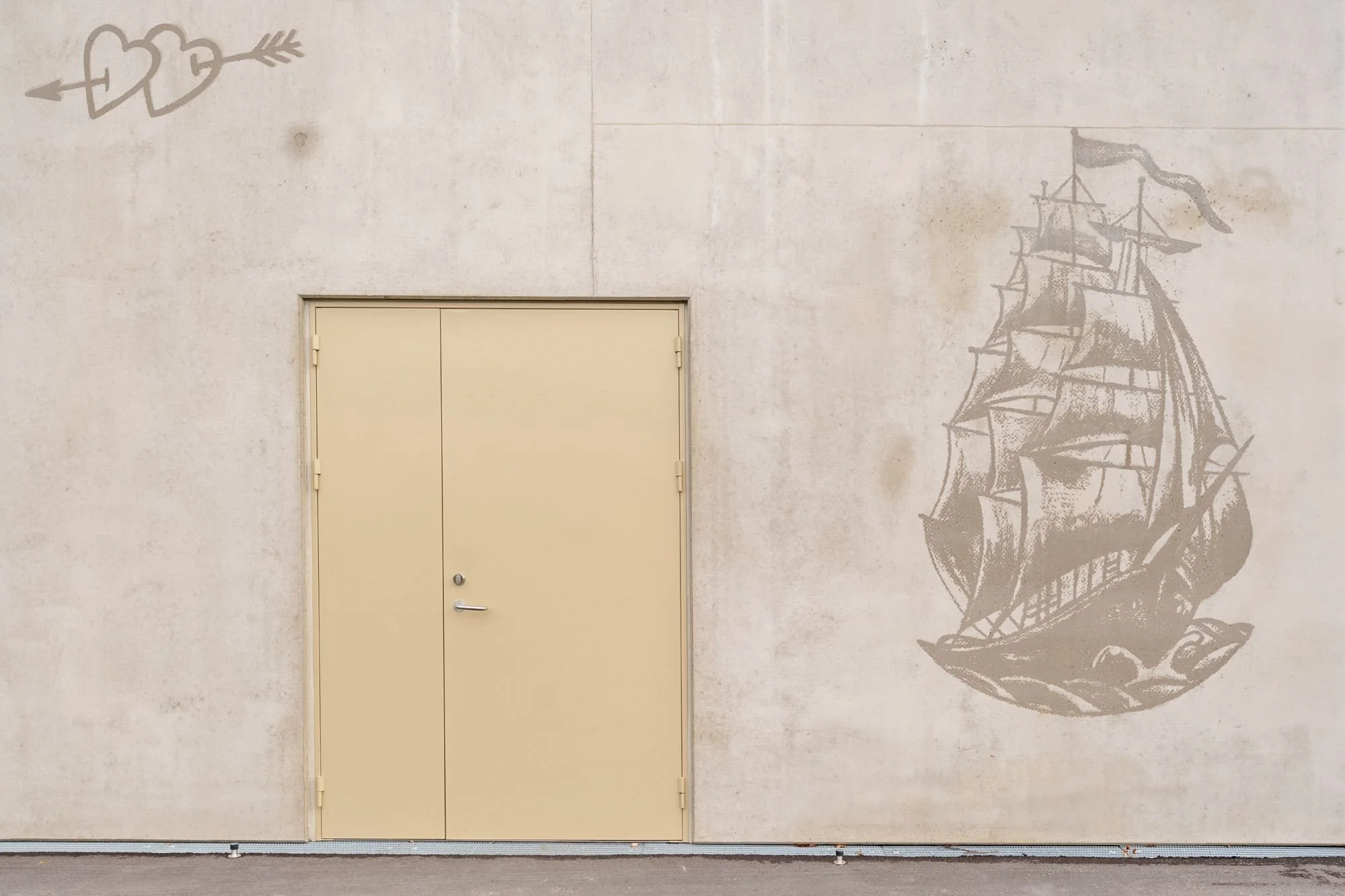
Art project Under the Same Moon
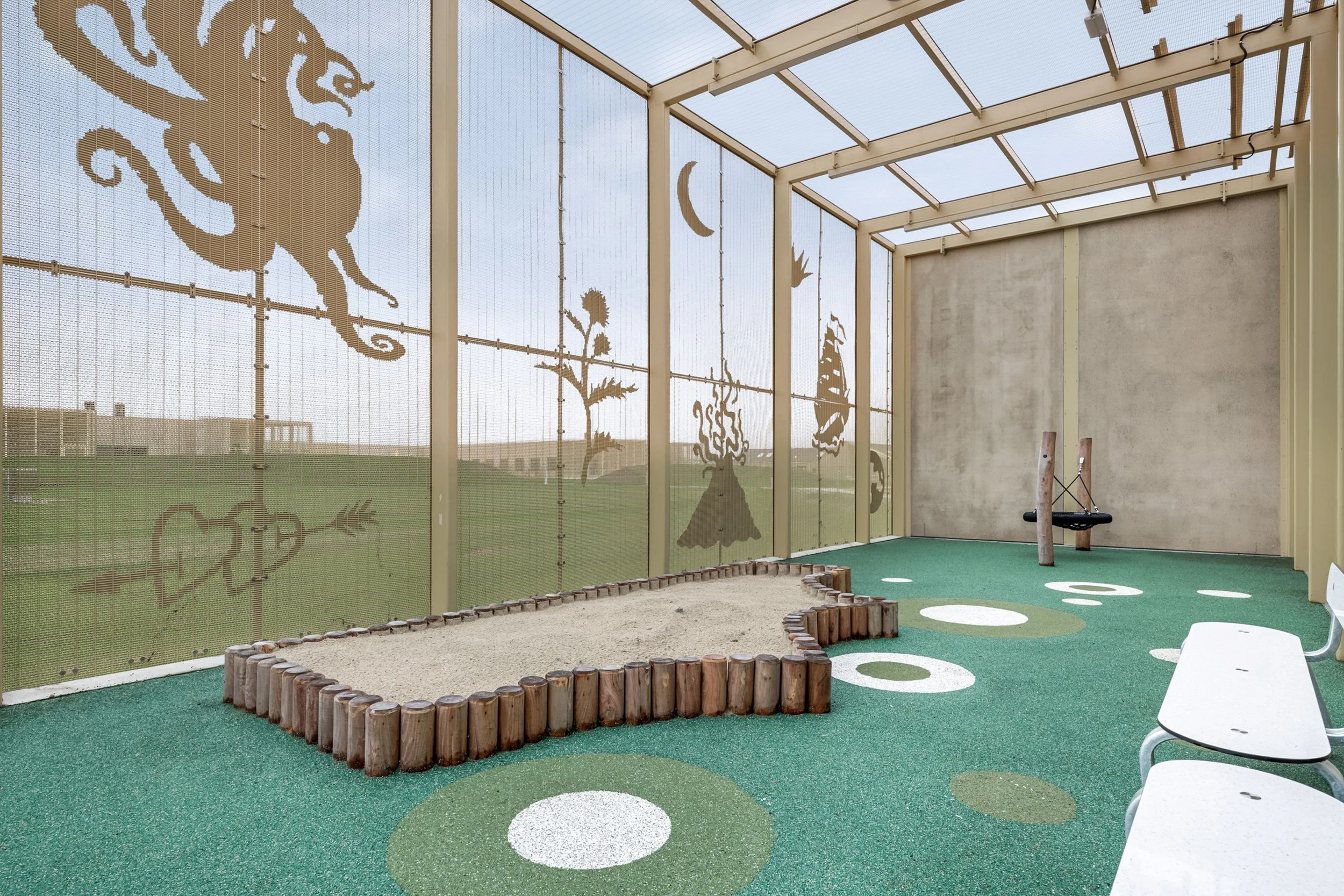
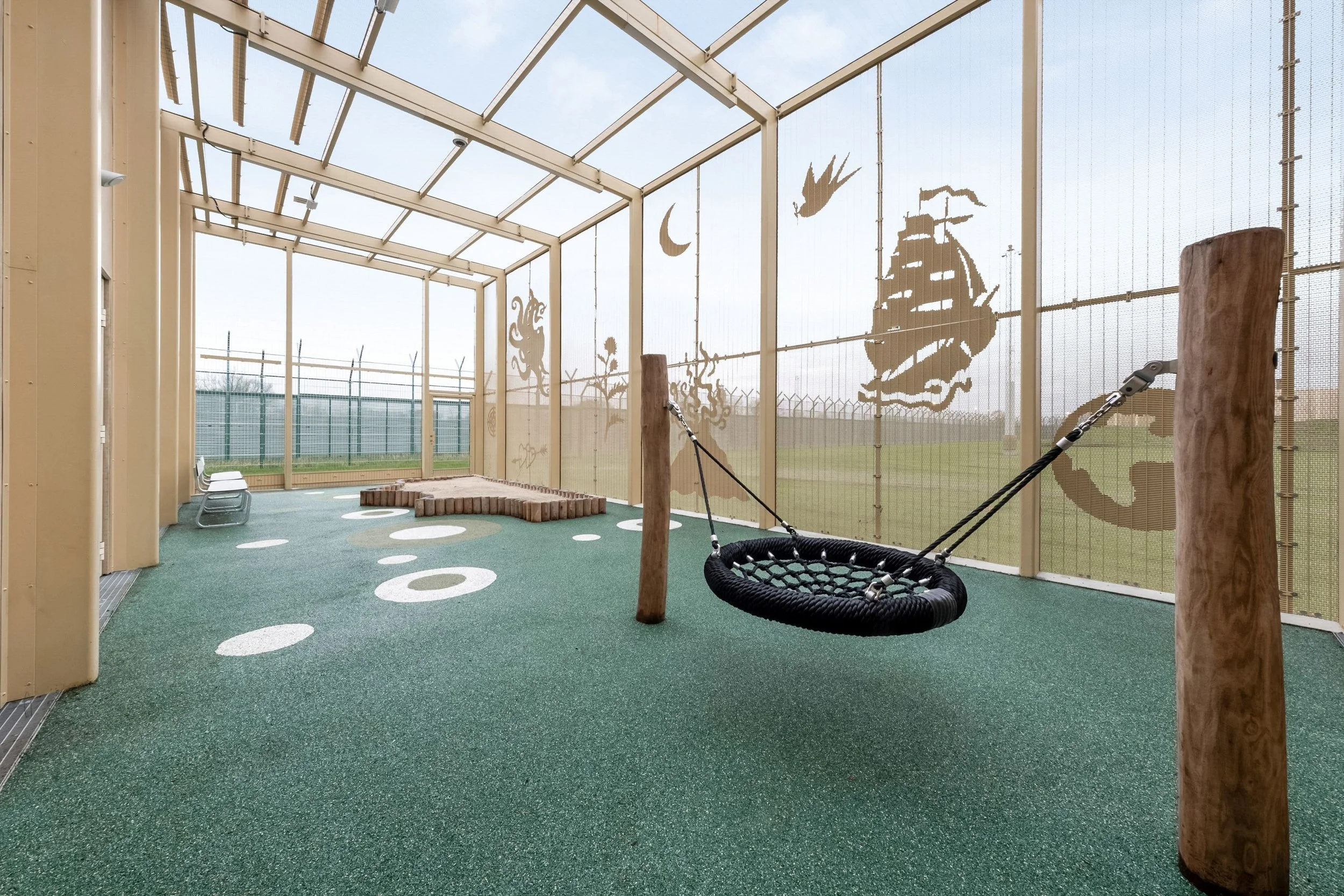
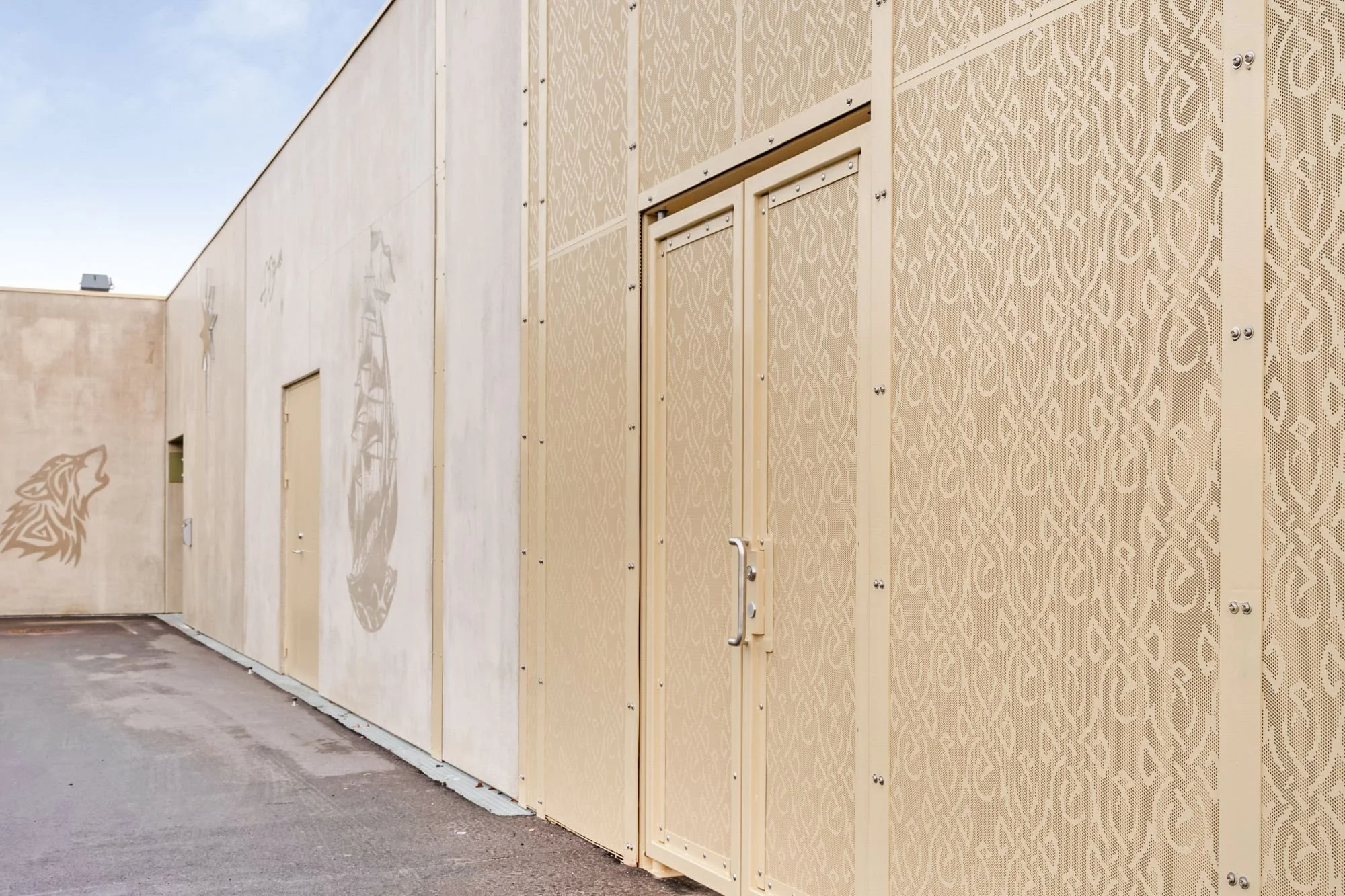
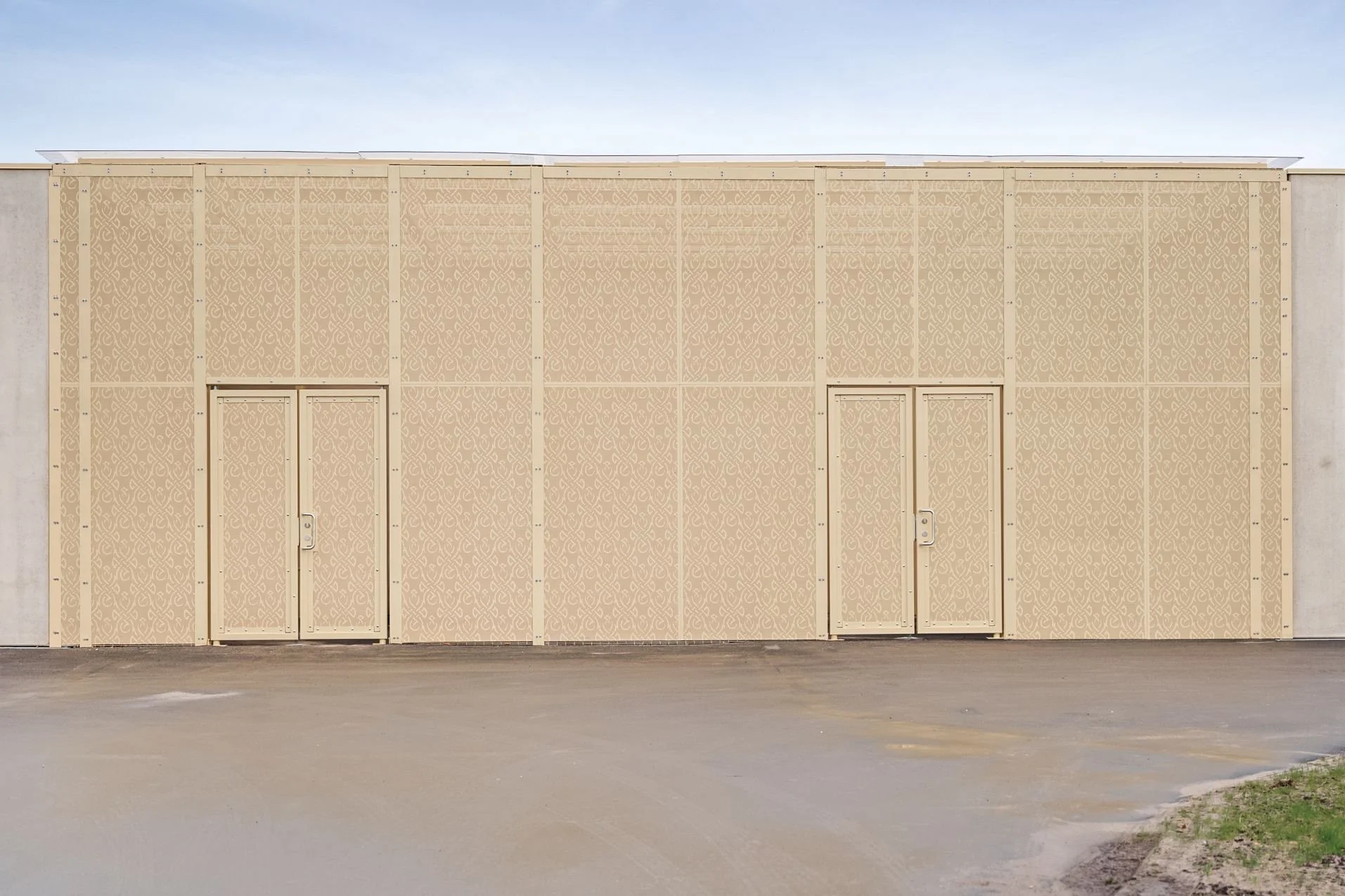
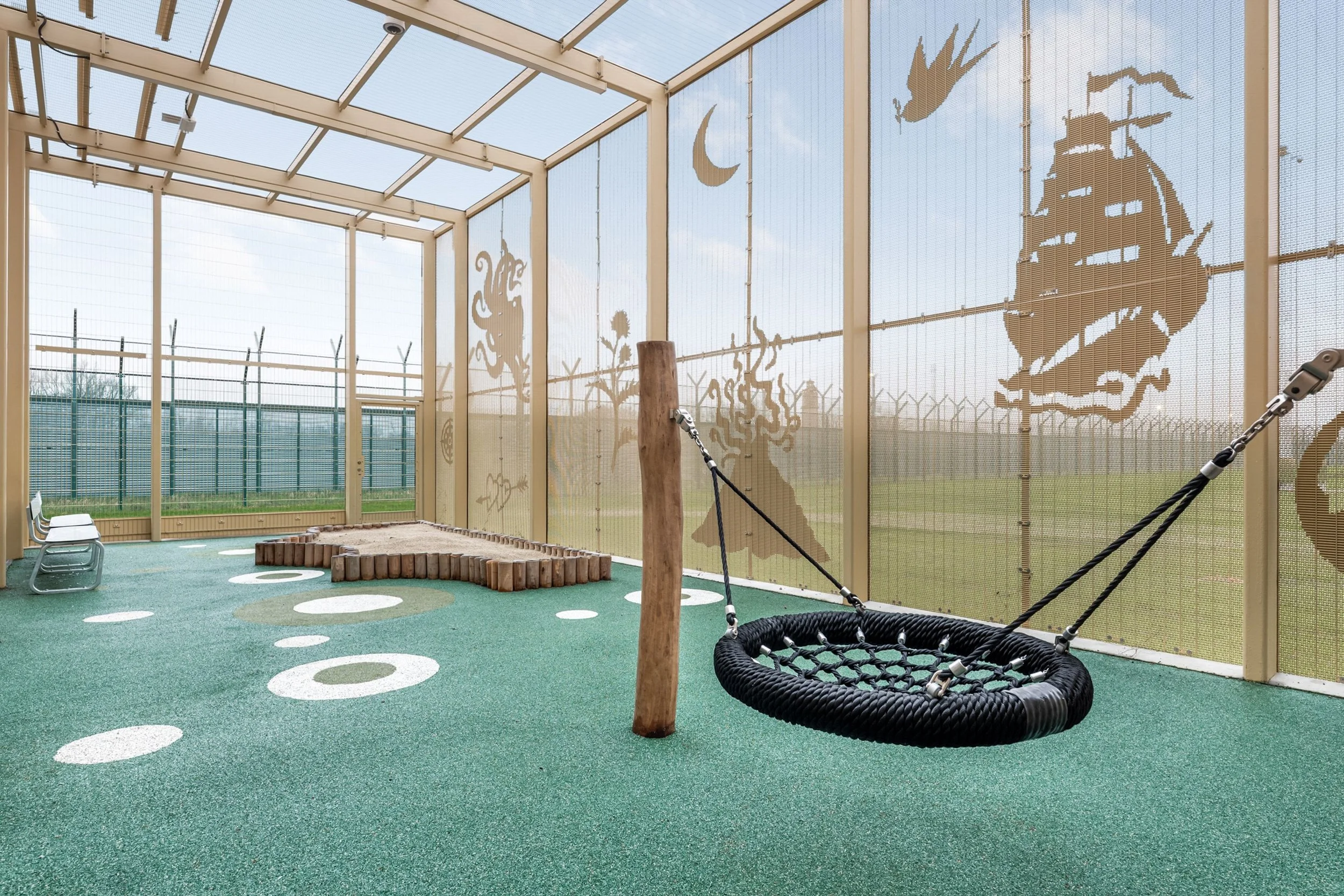
The art project for the new closed prison in Sønder Omme, created by Hesselholdt & Mejlvang, is rooted in the healing potential of art and its positive impact on mental and social well-being. Integrated throughout the prison, the artworks form part of everyday life for both inmates and staff, contributing to a more humane and engaging environment.
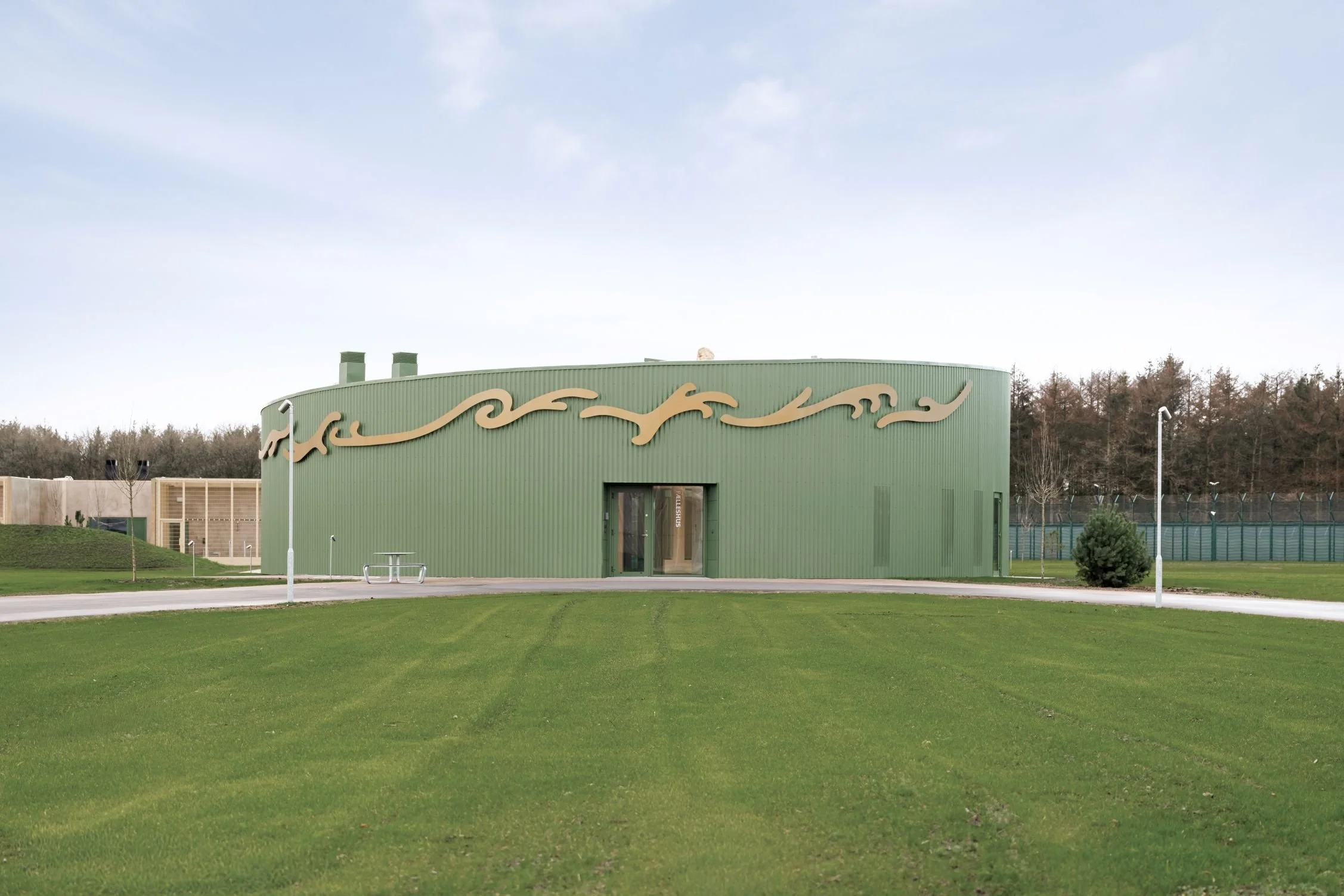
The prison is conceived as a coherent organism, animated through drawings, patterns, light, humor, and depth. Artworks are strategically placed across key locations, from entrance areas and residential buildings to the community house, which is highlighted as the social and emotional heart of the facility. A coloring book featuring the artistic motifs has also been produced as a gift for visiting children.
Spaces for visits and family contact
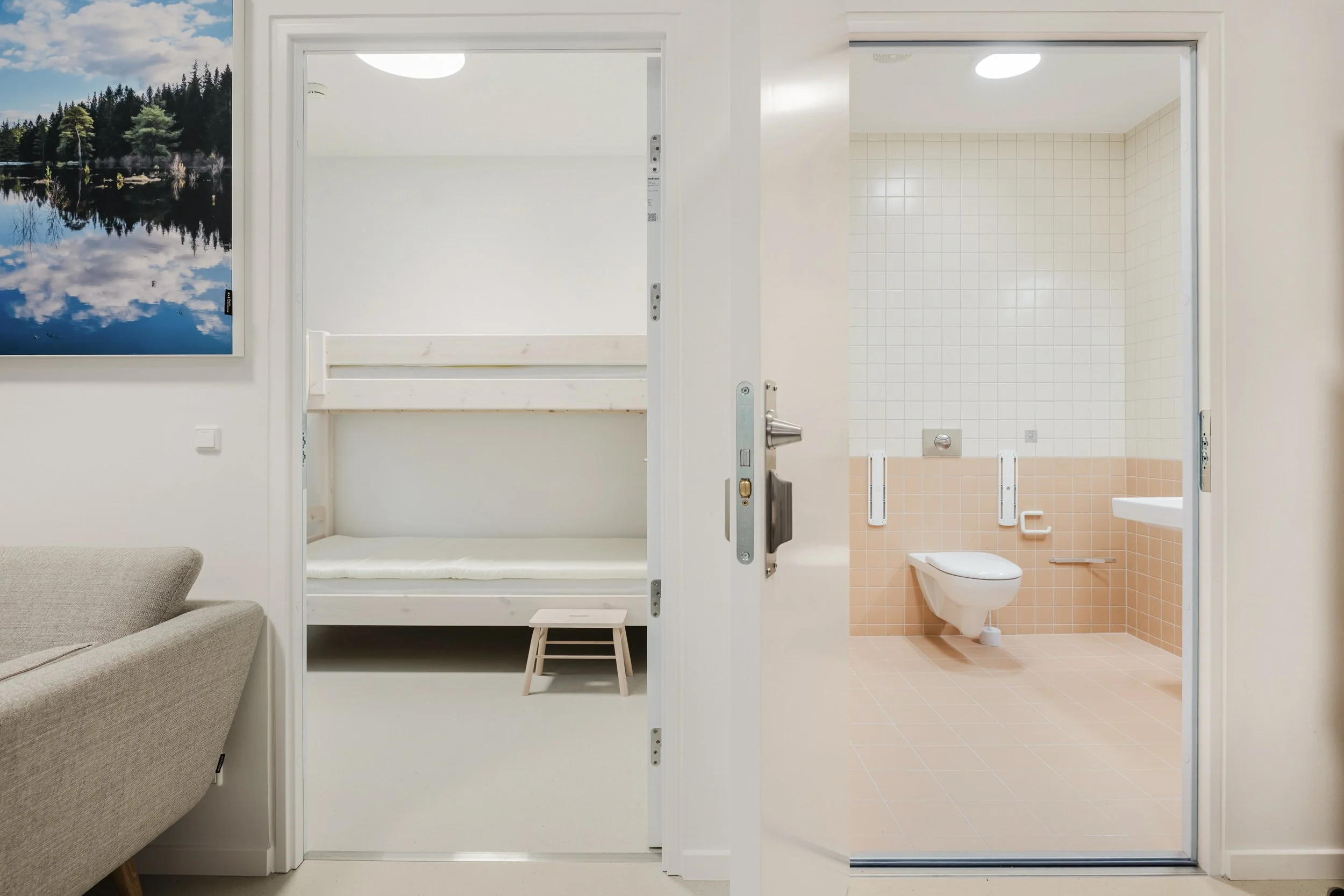
The visiting facilities at Sønder Omme Prison are designed to provide a calm and considerate setting for visits, with particular attention given to relatives and children. The spatial layout includes differentiated and private visiting rooms for standard visits and family visits, allowing varying degrees of privacy and interaction. Through this approach, the architecture supports inmates’ close relationships while ensuring dignity, clarity, and a non-intrusive experience within a highly secured environment.
Sustainability initiatives
Sønder Omme Prison has demonstrated that voluntary sustainability measures can be successfully implemented in high-security construction. The project has generated valuable knowledge and established a benchmark for future prison developments.
Key successes
LCA optimisation: Two out of three buildings achieved a CO₂ footprint below the BR23 requirement
Resource use: Effective nudging and waste sorting on the construction site
Problematic substances: The supplier market proved mature, with a wide availability of eco-labelled products
Indoor climate: Excellent measurement results for emissions, well below regulatory limit values
Looking ahead
Although prison construction has been exempt from climate requirements as critical infrastructure since 1 July 2025 (BR25), the project clearly demonstrates the value of a proactive sustainability approach. Many of the tested measures are expected to become standard practice, and the market for environmentally optimised building materials is developing positively.
The greatest impact is achieved by integrating sustainability considerations from the very beginning of the project—particularly through LCA analyses in the early design phases, where choices regarding geometry, construction, and materials have the greatest influence